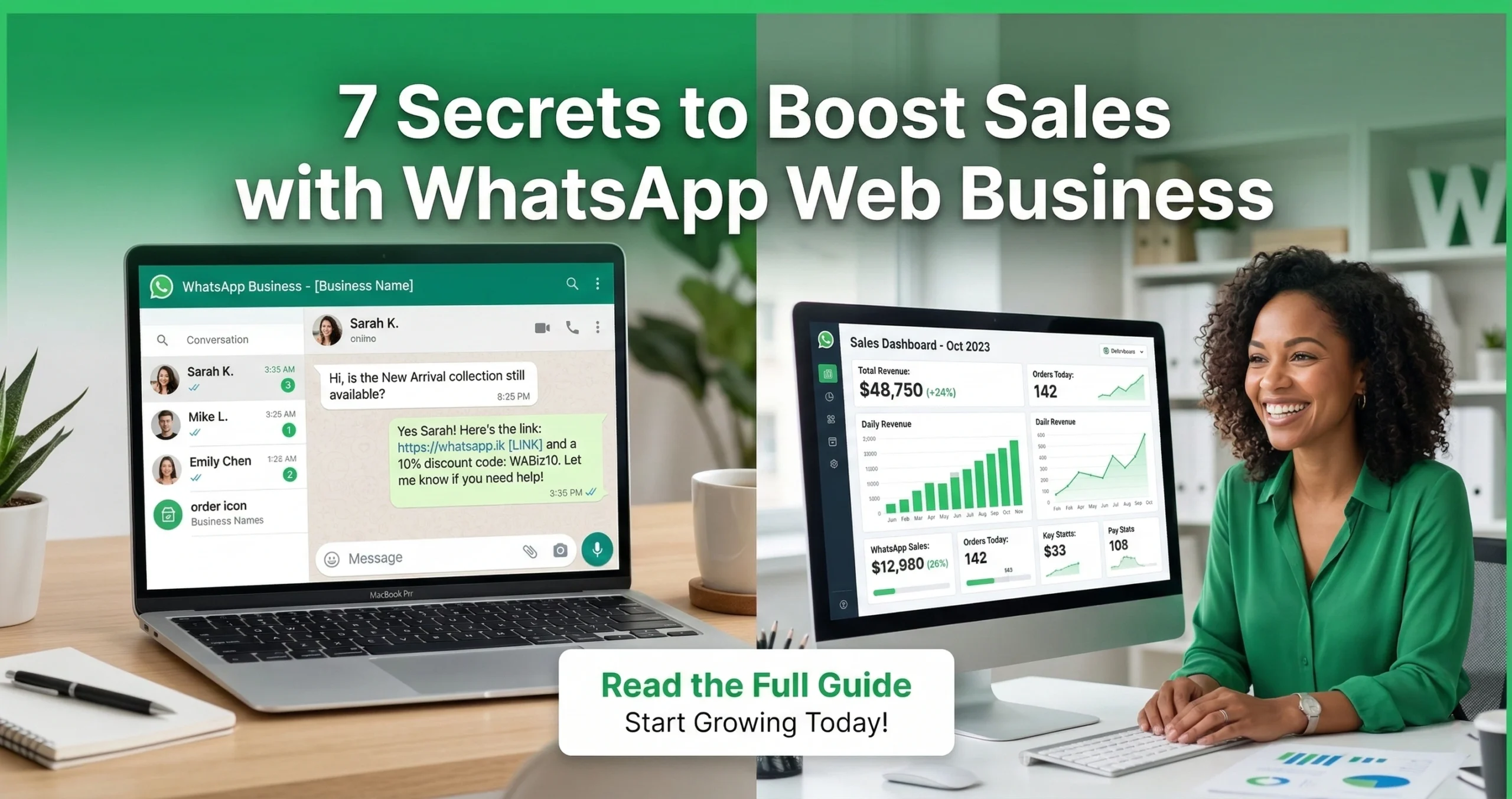

The WhatsApp Business API for Real Estate is an enterprise-grade communication solution designed to help agencies automate lead qualification, scale client interactions, and close property deals faster than traditional methods. Unlike the standard app, the API enables bulk broadcasting, multi-agent access, CRM integration, and automated chatbots, allowing realtors to engage thousands of leads instantly and maintain a “speed to lead” of under five minutes—a critical factor in modern property sales.
Is Your Real Estate Business Losing Leads to Slow Response Times?
In the hyper-competitive real estate market, time is the ultimate currency. Data suggests that lead qualification rates drop by 400% if you wait just 10 minutes to respond to an inquiry. Modern buyers expect instant gratification; they want floor plans, pricing, and site visit schedules immediately after clicking an ad. If your team is manually typing responses on personal phones, you are likely leaving significant revenue on the table.
Agencies relying on manual follow-ups often face a bottleneck where high-intent leads turn cold before an agent can dial the number. Implementing an automated infrastructure using tools like Waplify allows you to capture intent instantly, 24/7, ensuring no potential buyer slips through the cracks due to a delayed response.
Quick Answer: What Is WhatsApp Business API for Real Estate?
The WhatsApp Business API is not an app you download from the Play Store; it is a powerful interface provided by Meta that connects to third-party software to manage high-volume messaging. It transforms WhatsApp from a simple chat tool into a full-funnel marketing engine specifically tailored for high-ticket industries like real estate.
Definition: The Enterprise Solution for Scalable Property Sales
While the standard WhatsApp Business app is limited to small business owners handling a few chats a day, the API is built for scale. It allows real estate developers and brokerages to send thousands of messages simultaneously, automate complex workflows, and integrate communication data directly into their CRM.
Key Capabilities: Green Tick Verification, Chatbots, and Broadcasts
The API offers features unavailable on the standard app that build trust and efficiency:
- Green Tick Verification: Establishes brand authenticity, crucial for high-value transactions.
- Intelligent Chatbots: Automatically qualify leads by asking about budget, configuration (2BHK/3BHK), and location preference.
- Broadcasting: Send newsletters, new project launch alerts, and price drop notifications to unlimited opted-in users without getting banned.
Data Breakdown: Conversion Rates of API vs. Traditional SMS
Real estate marketing relies heavily on outreach. Comparing channels reveals a stark difference in engagement:
- SMS: 98% delivery rate, but only -3O/open rate and <1% conversion.
- Email: -200/open rate, often buried in “Promotions” tabs.
- WhatsApp API: 98% open rate and 45-60% click-through rate.
Buying decisions happen in conversations, not in inboxes. The interactive nature of WhatsApp drives higher site visit bookings compared to static SMS blasts.
Comparison: WhatsApp Business App vs. WhatsApp API
Many agencies start with the free Business App but quickly outgrow it. Understanding the technical limitations is essential for scaling operations. The API removes the fear of account bans associated with bulk messaging on the standard app and introduces multi-user functionality.
Table: Feature Differences, Limitations, and Use Cases
| Feature | WhatsApp Business App | WhatsApp Business API |
| User Access | Single user (on mobile/web) | Unlimited Multi-Agent Access |
| Broadcasting | Limited to 256 contacts (must have number saved) | Unlimited (to opted-in users) |
| Automation | Basic Greeting/Away messages | Advanced Chatbots & Flows |
| Green Tick | Not Available | Available (via application) |
| Risk of Ban | High (if bulk messaging) | Zero (if compliant) |
| CRM Integration | No | Yes (Native Integration) |
| Cost | Free | Pay-per-conversation |
Why Growing Agencies Hit a Wall with the Standard App
As your lead volume grows to 50 or 100 inquiries a day, a single phone device becomes a choke point. You cannot assign chats to different sales agents, track performance, or automate qualification. In this case transitioning to the API is the only way to centralize communication and ensure data ownership remains with the company, not the individual agent’s phone.
Lead Generation Strategies: From Click-to- WhatsApp to Conversion
Generating leads is only half the battle; the other half is starting the conversation. WhatsApp reduces the friction of filling out long web forms, which often deter mobile users.
Leveraging Facebook and Instagram Click-to-WhatsApp Ads
Meta allows you to create ads where the “Call to Action” button opens a WhatsApp chat instead of a landing page. This strategy reduces lead acquisition costs (CPL) significantly. Once the user clicks, their phone number is automatically captured, and a pre-set message (e.g., “I am interested in the Downtown Villa Project”) is triggered.
Using QR Codes on ‘For Sale’ Signage and Open House Flyers
Physical marketing materials are staples in real estate. Placing a WhatsApp QR code on “For Sale” signs, open house flyers, or newspaper ads bridges the offline-online gap. A potential buyer walking past a property can scan the code to instantly receive a digital brochure, floor plan, and price sheet, initiating a lead in your system without manual entry.
Strategy: The ‘Speed to Lead’ Auto-Response Protocol
Speed is the primary driver of conversion. Your API setup should trigger an immediate workflow the moment a lead lands:
- Instant Greeting: “Hi [Name], thanks for your interest in [Project Name].”
- Rich Media Delivery: Send a PDF brochure or a video walkthrough immediately.
- Agent Alert: Notify the sales team to follow up personally if the bot detects high intent.
Technical Deep Dive: Using WhatsApp Flows for ‹!2!uaIification
WhatsApp Flows allows you to build structured forms directly within the chat interface. This replaces clumsy text-based back-and-forth with a smooth, app-like experience.
Replacing Static Web Forms with Native Chat Screens
Instead of redirecting a user to a slow-loading website to fill out a form, Flows render instantly in the chat. This keeps the user in the app where they are most comfortable, drastically reducing drop-off rates during the qualification process.
Sample Flow: Qualifying Budget, Location, and Move-In Date
A typical qualification flow for a real estate bot might look like this:
- Step 1: “What type of property are you looking for?” (Options: Apartment, Villa, Plot)
- Step 2: “What is your preferred budget range?” (Options: $200k-$400k, $400k-$600k,$600k+)
- Step 3: “When are you planning to buy?” (Options: Immediately, 1-3 Months, Just Browsing)
Based on these inputs, the API can automatically tag the lead as “Hot,” “Warm,” or “Cold” in your dashboard.
Advanced Retargeting: Re-Engaging Cold Property Leads
Real estate sales cycles are long. A lead who inquired six months ago might be ready to buy today. The API allows for precision retargeting that keeps your inventory top-of-mind without being spammy.
Segmentation Strategy: 2BHK vs. Luxury Villa Buyers
Never send a generic “Happy Holidays” message to your entire list. Segment your audience based on their previous interactions. If a group of leads previously inquired about 3-bedroom luxury apartments, they should only receive updates about premium listings, price drops on luxury units, or exclusive launch events.
Automated Drip Campaigns for Missed Site Visits
“No-shows” are common in real estate. Automate a polite follow-up sequence for leads who missed a scheduled viewing:
- 2 Hours After: “Hi [Name], we missed you today! Would you like to reschedule?”
- 2 Days After: “Here is a virtual tour of the property you missed.”
- 1 Week After: “Are you still looking for a property in [Location]? Here are 3 similar options.”
Broadcasting New Listings to High-Intent Segments
When a new property hits the market, speed is essential. Using the API, you can broadcast the listing with images and video to thousands of qualified leads instantly. This often generates site visits within hours of a property going live.
Integration Guide: Connecting WhatsApp to Real Estate CRMs
To truly scale, WhatsApp must talk to your existing tech stack. Siloed data leads to lost sales and confused agents.
Syncing Chat Logs with Zoho, Salesforce, and HubSpot
Most enterprise CRMs integrate with WhatsApp API providers. This ensures that every chat message sent or received is logged under the contact’s profile in the CRM. Sales managers can audit conversations for quality assurance and ensure agents are following scripts.
Using Waplify to Centralize Lead Management
Tools like Waplify act as a bridge, offering a centralized inbox where multiple agents can manage conversations. You can assipn labels, set reminders for follow-ups, and view analytics on response times. This centralization transforms WhatsApp from a chaotic messaging app into a structured sales pipeline.
Pricing Analysis: Budgeting for the WhatsApp API
Unlike the free app, the API involves costs. However, the ROI from recovered leads usually justifies the investment.
Understanding Meta’s Conversation-Based Pricing (Service vs. Marketing)
Meta charges per 24-hour conversation window, categorized by type:
- Marketing: Promotional broadcasts (e.g., New Launch alerts). These are the most expensive.
- Utility: Transactional updates (e.g., Payment receipt for booking).
- Service: User-initiated conversations (e.g., A lead asks for a price). These are the cheapest or sometimes free within limits.
Smart budgeting involves encouraging user-initiated conversations (Service) via Click-to- WhatsApp ads to keep costs low.
Cost Comparison: Waplify’s One-Time Payment vs. Recurring Subscriptions
Most API providers charge a monthly subscription fee on top of Meta’s conversation charges. This can add up for agencies with fluctuating cash flow. It is worth analyzing the Waplify Pricing(https://wapIify.io/pricing) structure, which offers unique one-time payment options. This model eliminates the recurring software overhead, allowing you to allocate more budget directly to ad spend and conversation costs.
Expert Analysis: Compliance and Quality Rating
Meta is strict about user experience. If users block your real estate blasts, your number’s quality rating will drop.
How to Maintain High Quality Scores While Broadcasting
- Relevance: Only send messages to leads who have opted in or inquired previously.
- Frequency: Limit broadcasts to 1-2 times a week max.
- Opt-Out: Always include a “Reply STOP to unsubscribe” footer. This simple addition prevents users from reporting your number as spam, preserving your Green Tick eligibility and High Quality rating.
GDPR and Opt-In Rules for Real Estate Clients
Ensure you are compliant with local data laws. When collecting leads via Facebook Ads or website forms, include a checkbox stating: “I agree to receive property updates via WhatsApp.” This explicit consent is mandatory for utilizing the API safely and effectively.
Conclusion: Future-Proofing Your Real Estate Sales Funnel with Waplify
The real estate industry is shifting from cold calling to conversational commerce. The WhatsApp Business API is no longer a luxury; it is a necessity for agencies that want to nurture leads at scale and reduce the lead-to-site-visit time. By leveraging automation, chatbots, and strategic broadcasts, you can ensure that every lead receives a VIP experience.
For agencies looking to implement this technology without the burden of heavy monthly fees, exploring the Waplify’s ecosystem offers a robust, cost-effective path to modernizing your sales process. Start automating today to close more deals tomorrow.