
The WhatsApp Business API News Today will continue to evolve and grow in 2026, which means that companies already involved or planning to be involved with WhatsApp enterprise messaging should stay in touch with everything happening in the industry – from major policy changes and integration updates to global competition surrounding both AI and messaging as an industry.
This article is intended to share both the generic updated trends but also major policy changes that will impact how businesses, both large and small, utilize the WhatsApp business ecosystem and how they do so strategically.
🔗 Links are provided throughout the article to relevant internal research sources for readers to do their own in-depth research and find authoritative articles and primary sources to review regarding these issues.
What’s Happening with WhatsApp Business API News Today
At the start of 2026, significant revisions are being made by Meta regarding their WhatsApp Business API and the way businesses can use it to communicate with customers and automate customer interactions.
The following developments were announced:
- Policy changes limit the use of AI chatbots for general customer interaction on the WhatsApp Business API. Third-party AI assistants like ChatGPT and Perplexity will no longer be permitted to operate over the WhatsApp Business API after January 15, 2026, except when used by businesses only as a means of obtaining assistance in conducting core business operations.
- The strategy regarding revenue generation and control of the WhatsApp Business API has changed. Meta’s reasoning underlying their change in the strategy being placed on the WhatsApp Business API has been to focus on providing customer engagement and not to be utilized as a distribution mechanism for AI assistants.
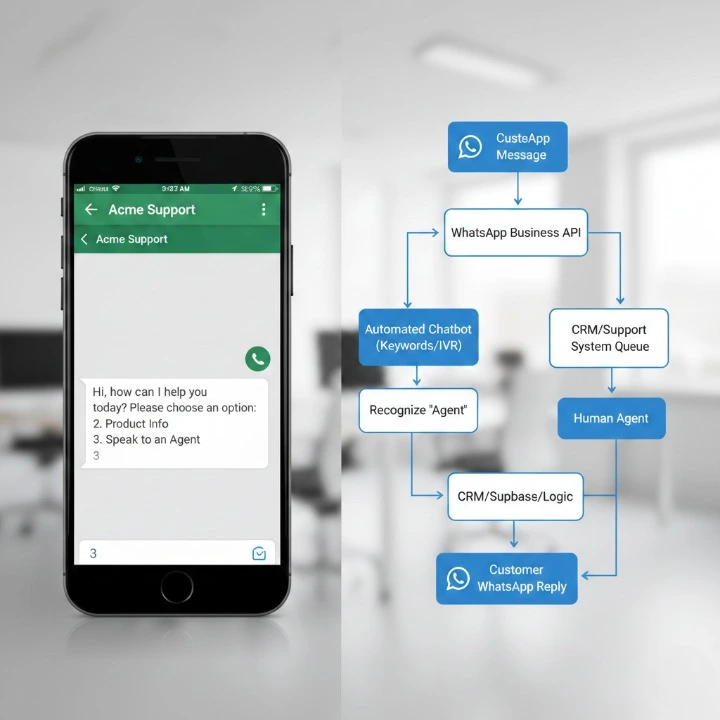
- There remains support for automating business workflows. Businesses will be allowed to continue using automation for customer support, appointment reminders, and transactional messaging in accordance with their intended use of the WhatsApp Business API.
🧠What this means: Businesses that have historically relied on the use of AI assistants through the WhatsApp Business API may need to change their workflow processes to focus on the use of business-oriented automation instead of open-ended conversations with AI assistants.
👉 Primary source on recent policy shift: https://www.aibase.com/news/22090
Latest Changes in Terms & Third-Party AI
Meta has recently announced a change to its WhatsApp Business API guidelines and will not allow businesses to use generalised AI chatbots, such as OpenAI’s ChatGPT and Microsoft’s Copilot, on the API, starting from January 1st, 2026. However, Meta’s new policy change has ramifications for developers beyond the reach of the two aforementioned companies.
Due to changes in the policies governing how Meta blocks competitors from using its platform (i.e. through API integration), EU regulators are investigating Meta’s activities, as they raise concerns about potential antitrust violations in this case.
In addition to ongoing investigations into Meta’s practices, a number of companies, have begun reporting an overall change in the way that API providers will begin working with automation and which types of automation will be permitted.
This shift means:
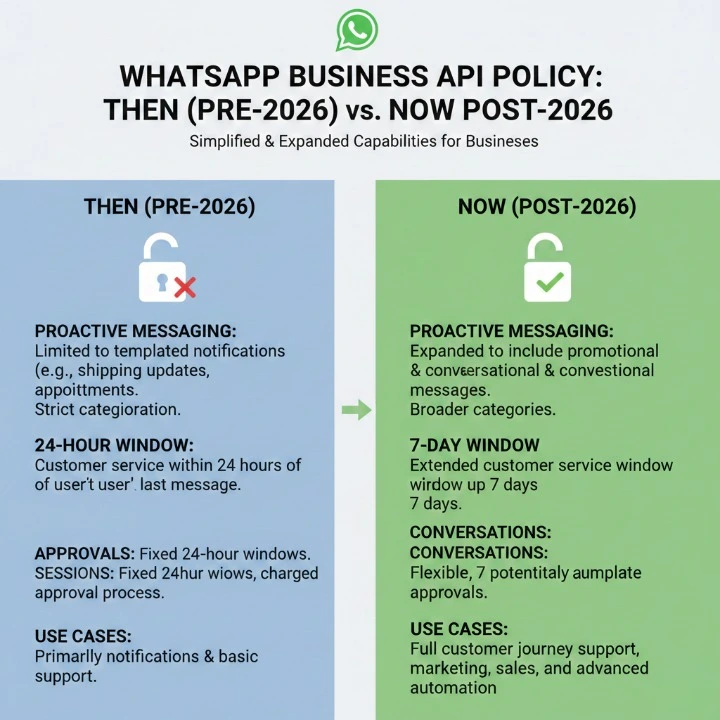
| Aspect | Before 2025 | After 2026 Update |
|---|---|---|
| Third-party AI bots | Allowed | Mostly banned |
| Business Rules | Flexible | Tightly structured |
| Meta AI bots | Not prioritized | Preferential access |
| Compliance burden | Medium | Higher |
| Developer experimentation | Easy | Restricted |
Table: WhatsApp Business API Policy Comparison
External Link: Meta’s policy PDF on WhatsApp Business messaging rates salesforce.com/pdf/whatsapp-business-messaging-rate-card-dec-1-2025.pdf
Why These Policy Changes Matter
Meta’s new API position is clearly about more than just technology; it’s also about the overall business strategy behind how companies build customer experiences:
🔐 Monetization Control
Meta plans to see the WhatsApp Business API become a revenue-generating entity instead of a channel for pushing messages through third-party software providers. By disallowing unauthorized AI assistants from using the API, companies will be able to focus their messaging efforts on official business communications rather than a plethora of different AI companies.
⚙️ Infrastructure Stability
Chatbot applications that provide an unlimited number of open conversations (for example, general AI chatbots) create large numbers of messages, meaning they will be a drain on the servers and compliance systems. Therefore by prohibiting open-ended AI conversations via the API to limit the “surprise” load they introduce to the infrastructure.
📊 Strategic Positioning
The WhatsApp Business API has over 3 billion users worldwide, which means that it is being used more than ever to engage with customers. In Meta’s view, the Business API represents an important component of its overall business strategy and not just a way to monetize advertisements.
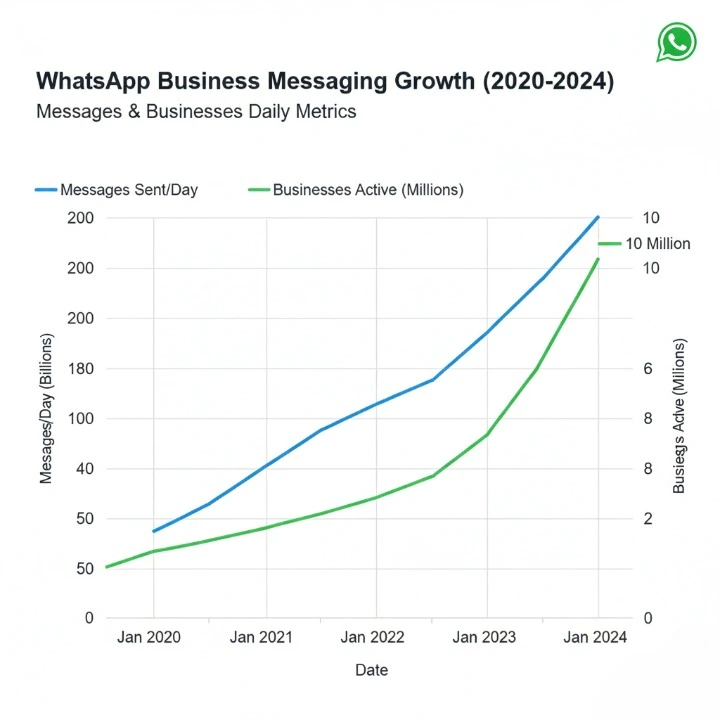
External Reference: “WhatsApp Daily Messages & Usage Stats 2025” electroiq.com/stats/whatsapp-business-statistics/
What Businesses Should Do Now
If you are currently utilizing the WhatsApp Business API, or will in the upcoming future, here are actionable steps you can take in 2026 to continue achieving business success:
- Conduct an audit of existing AI integrations: Review your current automation and chatbot systems to ensure that they align with your business workflows, and do not serve merely as general AI assistants. Deployment of general chat assistants may breach updates to API terms.
- Optimize template messaging: The WhatsApp Business API continues to support only verified template messaging (e.g. order confirmation and alerting) and therefore optimizing template design for these types of messages will continue to be important.
- Verify Your API Provider: Using authorized platforms such as Waplify and other recognized BSPs (Business Solution Providers) will help ensure compliance, support, and scalability. Waplify provides WhatsApp Business API compliant solutions along with structured support and automation tools.
🔗 Meta API rate card (Dec 1, 2025) — https://www.salesforce.com/en-us/wp-content/uploads/sites/4/assets/pdf/whatsapp-business-messaging-rate-card-dec-1-2025.pdf
WhatsApp Business API Provider Options (2026)
Here’s a quick comparison of tools and service providers in the WhatsApp API ecosystem:
| Provider | Official Meta BSP | AI Capabilities | Best For |
|---|---|---|---|
| Waplify | Yes | Advanced automation | SMEs + eCommerce |
| GreenPing | Yes | Smart automation | Support & notifications |
| Wassat / Wachat | Mixed | Basic AI chatbot | Campaign & sales |
| WAiSE | Official Cloud API partner | AI & CRM focus | Integrated CRM use |
| Wappx | Yes | Broadcast + API | Messaging campaigns |
Trending Use Cases in 2026
The WhatsApp Business API is still one of the most distinguished and effective solutions for global business communications regardless of limitations.
📌 Automate Customer Support
When used for a service use case, customer support can be automated to handle frequently asked questions, support tickets and provide real-time support using the WhatsApp Business API.
📌 Transaction and Delivery Updates
Use endorsed templates to send order notifications, shipping updates and payment confirmation to streamline transactional messaging on WhatsApp.
📌 Engagement Flows
Marketing broadcasts and segmented contact messages can be highly effective when aligned with WhatsApp’s messaging regulations and approved by WhatsApp.
Real-World Impact — Developer & Community Insights
The changes being made have sparked much conversation in the developer community regarding their impact on real-world operations.
Some companies are mentioning restrictions (API limits) on sending many automated messages, while others are struggling with documentation and onboarding challenges such as template approvals and webhooks.
Community threads stress the need for using experienced BSPs to help ensure compliance.
Frequently Asked Questions (FAQs)
1. What’s new regarding WhatsApp Business API on this day?
Today’s Main update is on policy and the use of Artificial Intelligence (AI). Meta has provided additional clarification on the way third party AI chatbots may function in relation to the WhatsApp Business API, as well as provided a greater level of restrictions on how business automation is used for customer service, order updates, customer notifications and other customer contact methods. There is still an opportunity for businesses to use AI to automate customer service functions, but as it relates to the how AI assistants can be used in regards to business operations, businesses will need to ensure compliance with current Meta policy and periodic announcements/lawful directives from Meta.
2. Has WhatsApp banned AI chatbots from the WhatsApp Business API?
No, there are limitations around the all-encompassing use of an AI assistant as a method for communicating with customers via the WhatsApp Business API (i.e., general-purpose AI Assistant used similar to a chat room). However, AI chatbots that are only intended to provide a business workflow (e.g., customer service, appointment reminders, order status updates) are still permitted to be used in compliance with the Meta policies.
3. Is the WhatsApp Business API worth using in 2026?
Yes, 100%. There are still several benefits to using the WhatsApp Business API including: Large number of global users; High Open & Engagement Rates; and Direct Engagement with Customers. The current Meta policies are considerable changes to how you will use the WhatsApp Business API, but by developing a clear strategy and adhering to the current policies, you will continue to receive the same benefits of the WhatsApp Business API as you have received in the past.
4. How can businesses stay compliant with the new WhatsApp API rules?
Businesses can remain in compliance by:
Using approved message templates Avoiding the use of open-ended AI chat assistants Staying within the larger Scope of Meta (Facebook) Written Business Messaging Guidelines Being partnered with an Official Business-Solution-Provider (BSP). Constantly reviewing the policies. Trusting in a reputable trusted provider such as Waplify can also ensure your setup meets all current-compliance standards.
5. What are message templates in WhatsApp Business API?
Message templates are pre-designed and approved messages that businesses can send out-of-the-24-hour-window for customer-service responses. Some examples include: order confirmations, delivery updates, payment reminders, and appointment notifications. To use a message template, the company must receive approval from WhatsApp prior to it being sent out.
6. What is the difference between WhatsApp Business App and WhatsApp Business API?
One way to think about the WhatsApp Business App (for small businesses) is that the WhatsApp Business API (for medium and large-sized businesses) contains functionality beyond the original WhatsApp platform, such as automation, Customer Relationship Management (CRM) integrations, multiple user-agent support and scalable messaging solutions.
7. Can small businesses use the WhatsApp Business API?
Yes, small businesses can have access to the WhatsApp Business API, particularly if they know they are going to grow. Although there is an initial approval and technical process involved with obtaining access, providers such as Waplify have created methods that allow for a more streamlined onboarding process enabling access for growing businesses.
8. How often does WhatsApp update its Business API policies?
WhatsApp updates its policies for the Business API from time to time; sometimes several times a year. Prices, template categories, artificial intelligence use, and compliance rules are some of the things that may change. It is important that business check for official announcements on a regular basis to avoid having their account suspended or having their messaging ability restricted.
9. What happens if a business violates WhatsApp Business API policies?
If a business did not comply with WhatsApp’s Business API policies, it could result in:
- Limited message delivery to users
- Suspension of the businesses WhatsApp Business account for a limited amount of time
- A permanent ban from the platform
- This is why compliance with the WhatsApp API, and only using Approved Providers is so critical.
10. Where can I find the most current information about WhatsApp’s Business API updates?
There are a few key places to see WhatsApp’s Business API updates are:
- Meta for Developers website.
- WhatsApp Business Help Center.
- Official Announcements from Meta Business.
- Dashboard of your Business Solution Provider.
Being updated with regard to the changes will allow you to alter your strategies as required immediately after any changes are announced.
Final Thoughts: The Road Ahead for WhatsApp Business API
WhatsApps’ Business API is still evolving — and there are “news today” in 2026 more geared towards policy & compliance changes than the next big feature.
Key takeaways for businesses:
- Make sure your automation fits with the main business-oriented workflows of WhatsApp.
- Audit your AI chatbot deployments to maintain compliance post policy enforcement.
- Go for the right provider like waplify to be ensured a strategic support & integration.
- Keep track of future updates — particularly when it comes to message templates, pricing and automation features.
Relevant External Links for Deep Reference
Meta Business Messaging Rate Card (official)
🔗 https://www.salesforce.com/en-us/wp-content/uploads/sites/4/assets/pdf/whatsapp-business-messaging-rate-card-dec-1-2025.pdf
WhatsApp Business API Policy Ban Details
🔗 https://www.aibase.com/news/22090
GreenPing WhatsApp API Provider Info
🔗 https://greenping.in/
WAiSE — Official WhatsApp Cloud API Partner
🔗 https://waise.in/