

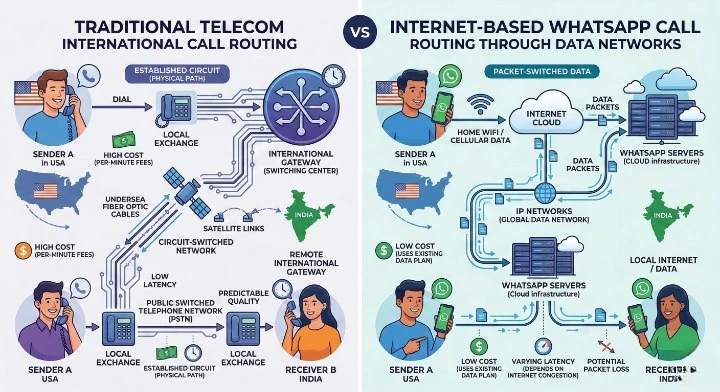
WhatsApp international calls represent a shift in the way people communicate across countries today, but international communication once depended on telecom networks that calculated cost based on distance between countries. When a person called another country through a telecom carrier, the signal traveled through international networks controlled by different operators. Each network layer added cost, which increased the total price of the call. Because of this structure, international calls became one of the most expensive forms of communication for many users around the world.
A simple conversation between two people living in different countries could generate high call charges. Telecom providers charged per minute, and the cost increased depending on the destination. This created a barrier for families, students, and businesses that needed frequent contact across borders. Many people searched for other methods that allowed communication without expensive billing.
Internet-based communication platforms changed the situation. Instead of routing voice signals through telecom networks, applications began to send voice data through internet connections. This method removed international distance from the billing structure. The user only needed an internet connection.
That change is where WhatsApp international calls entered everyday communication. The messaging platform expanded its services to include voice and video calls that travel through the internet rather than the mobile carrier network. The result is a system in which the distance between countries no longer determines the cost of a call.
Why Internet-Based Calling Became the Alternative
Internet calling became popular because it solved two problems at the same time. First, it removed international call charges. Second, it simplified communication across different countries without requiring specialized equipment. All a user needed was a smartphone and an internet connection.
The rise of mobile internet created the conditions for this shift. When smartphones became common and data networks expanded, messaging applications started to build voice communication features into their platforms. WhatsApp adopted this model and integrated voice calls into its messaging system.
This approach allowed a user in India to speak with someone in the United States, Europe, or the Middle East through the same application used for texting. The call moves through internet data packets instead of telephone switching networks.
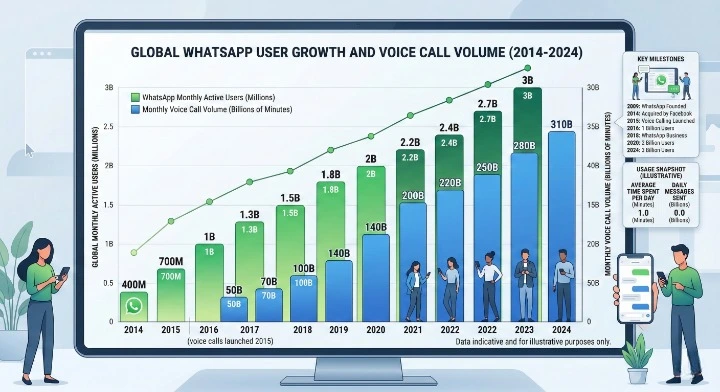
The scale of this communication model is significant. WhatsApp now has around 3 billion monthly active users worldwide, making it one of the largest communication platforms on the planet.
The growth of the platform also increased the use of WhatsApp international calls. When millions of people already rely on an application for messaging, adding voice communication inside the same system becomes the natural next step.

How WhatsApp International Calls Work
The Technology Behind WhatsApp Calling
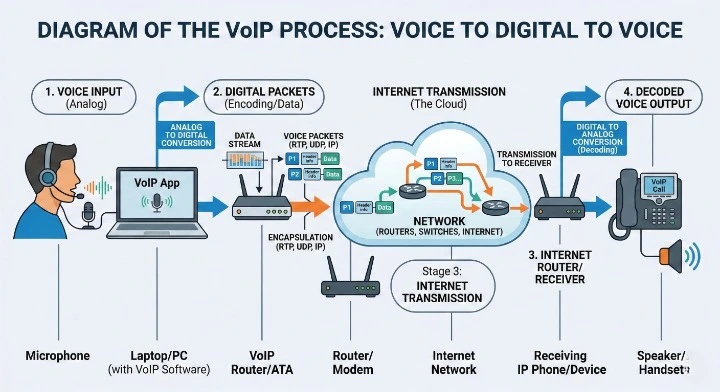
The foundation of WhatsApp international calls is Voice over Internet Protocol, commonly called VoIP. This technology converts voice into digital data packets. Those packets travel through the internet from one device to another and are converted back into sound.
Instead of dialing a telephone number through a carrier system, the application connects the call through the internet infrastructure used for data transmission. The call may travel through Wi-Fi networks, mobile data connections, or broadband systems.
The advantage of this system is flexibility. The location of the participants does not change the call structure. A person speaking from India and another speaking from Canada both transmit voice data through internet servers. The application manages the connection.
WhatsApp also manages bandwidth efficiency during calls. If the internet connection becomes unstable, the application adjusts data transmission to keep the call active. This ability allows communication even on slower networks such as 3G connections.
The volume of calls handled by the platform demonstrates the scale of this system. WhatsApp processes more than 5.5 billion voice calls and 2.4 billion video calls every month across its network.
That scale explains why WhatsApp international calls now function as a primary communication channel for many users around the world.
External source: https://www.whatsapp.com/calling
Security and Encryption in WhatsApp Calls
Communication across international borders requires trust. Many users want assurance that their conversations remain private. WhatsApp addresses this requirement through end-to-end encryption.
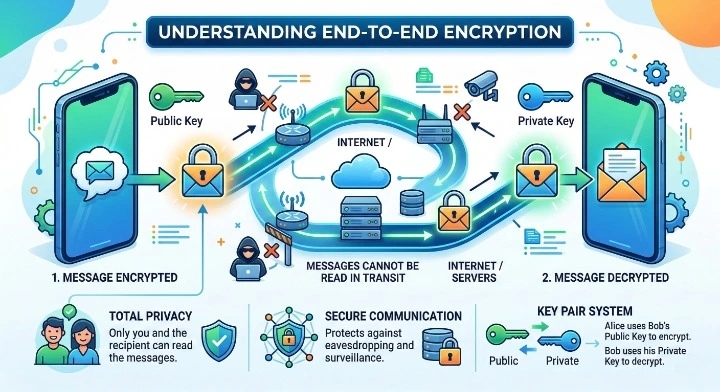
End-to-end encryption means the call data is encoded before it leaves the device and can only be decoded by the receiver’s device. Even the platform itself cannot read or listen to the communication during transmission.
The encryption system used by WhatsApp is based on the Signal Protocol, which is designed to protect voice and message content from unauthorized access. Research studies examining the platform confirm that this encryption method protects the data channel used for messages and calls.
This security framework contributes to the trust people place in WhatsApp international calls. Families communicate across continents, students stay connected with home countries, and businesses coordinate across offices through the same encrypted environment.
Security becomes even more relevant for organizations that rely on WhatsApp communication tools such as Waplify, which helps manage messaging workflows and outreach strategies within WhatsApp ecosystems. These tools rely on the same encrypted communication infrastructure while expanding operational efficiency.
External source: https://www.whatsapp.com/security/
Global Adoption of WhatsApp Calling
Worldwide Usage Data
WhatsApp usage statistics reveal how widely internet-based communication has spread across the world. Messaging alone reaches billions of people, but voice communication within the application has also grown significantly.
According to global usage research, WhatsApp supports around 3 billion users globally, representing more than one-third of the world’s population using the platform for messaging and communication.
User activity also shows strong engagement. Studies indicate that WhatsApp users collectively send more than 140 billion messages every day.
Voice and video calls have followed the same growth pattern. Over 100 million voice calls occur daily, demonstrating the reliance people place on the platform for communication beyond text messaging.
The expansion of internet access in developing economies also contributes to the growth of WhatsApp international calls. In regions where telecom call rates remain expensive, internet-based calling becomes the preferred option for international contact.
This trend is especially visible among migrant communities. Workers living abroad maintain daily communication with family members through WhatsApp calls instead of international telecom lines.
External source: https://sqmagazine.co.uk/whatsapp-statistics/
Countries With the Highest WhatsApp Adoption
The popularity of WhatsApp international calls varies across countries depending on internet penetration and smartphone adoption. Some nations have become dominant markets for the platform.
India leads global adoption with hundreds of millions of users, making it the largest WhatsApp market worldwide.
Brazil, Indonesia, the United States, and Mexico also show high user numbers. These regions share common characteristics: strong mobile internet adoption and large populations that rely on mobile communication for everyday interaction.
The following table summarizes WhatsApp user distribution by country.
| Country | Estimated Users |
|---|---|
| India | 549+ million |
| Brazil | 148 million |
| Indonesia | 112 million |
| United States | 100 million |
| Philippines | 88 million |
These markets contribute heavily to the volume of WhatsApp international calls, particularly among communities with family members living abroad.
External source: https://www.grabon.in/indulge/tech/whatsapp-statistics/
Real Case Study: Family Communication Across Countries
A typical case involves families separated by migration. Consider a household where one member works in another country. Communication becomes essential for emotional support, coordination of financial transfers, and daily updates.
Before internet calling, these families depended on telecom international calls. A single conversation lasting several minutes could generate substantial charges depending on the country pair involved.
The adoption of WhatsApp international calls changed that pattern. Instead of scheduling occasional conversations due to cost concerns, families now communicate daily.
A study of platform activity indicates that the average WhatsApp call duration reaches approximately 9.7 minutes, showing that users engage in meaningful conversations rather than short exchanges.
From a behavioral perspective, the platform removed financial barriers from international communication. When cost is no longer linked to distance, people communicate more frequently.

Business Communication Through WhatsApp Calls
Businesses increasingly integrate WhatsApp communication into their customer interaction systems. Instead of relying solely on traditional phone calls, companies use messaging and voice communication within the same application.
This integration becomes more structured when businesses adopt tools designed to manage communication campaigns. Platforms such as Waplify assist organizations in handling large-scale messaging workflows, automation processes, and contact management.
The use of WhatsApp international calls within business environments often appears in customer support situations. A company with clients in different countries may handle support conversations directly through WhatsApp calls. The interaction remains inside the messaging ecosystem where customers already communicate.
The scale of WhatsApp Business adoption highlights the demand for such systems. Reports show that hundreds of millions of businesses now operate on WhatsApp Business platforms worldwide.
This environment creates opportunities for communication tools that help businesses coordinate conversations, manage outreach, and maintain consistent engagement across markets.
External source: https://business.whatsapp.com/
Benefits of WhatsApp International Calls
Key Advantages
The rise of WhatsApp international calls comes from several practical benefits.
| Advantage | Explanation |
|---|---|
| No distance-based cost | Calls use internet data rather than telecom billing |
| Global reach | Users can connect across countries instantly |
| Integrated messaging | Text, voice, and video communication exist in one app |
| Encryption | Conversations remain protected through secure protocols |
These advantages explain why internet calling continues to expand across global communication networks.
Technical Limitations
Despite its benefits, WhatsApp international calls still depend on internet infrastructure. If the internet connection becomes unstable, the call quality may drop or the connection may disconnect.
Another limitation appears in regions where VoIP services face restrictions. Some countries limit internet-based calling due to telecom regulations.
Even with these limitations, the overall trend continues toward internet-based communication systems. As global internet access improves, the reliability of WhatsApp calls also increases.

Future of WhatsApp International Communication
Growth of Internet-Based Calling
The growth of internet communication shows no sign of slowing. As mobile data networks expand and smartphone usage increases, platforms like WhatsApp continue to become the default communication channel for global interaction.
Voice calls, video calls, and messaging now exist inside a single application used by billions of people worldwide. The convenience of this model continues to reshape international communication habits.
Businesses also recognize the importance of this environment. Tools like Waplify help organizations operate within the WhatsApp ecosystem while maintaining communication efficiency and structured workflows.
In the long term, WhatsApp international calls represent a shift in the way global communication operates. Instead of distance-based telecom billing, communication now travels through internet networks where geographical location plays a smaller role in cost and accessibility.
Conclusion
International communication once required expensive telecom connections that calculated cost by distance. Internet-based calling removed that barrier and replaced it with a model based on data connectivity. WhatsApp built its calling system on this structure, allowing billions of users to communicate across countries without traditional international call charges.
The growth of WhatsApp international calls reflects the transformation of global communication. With billions of users, encrypted voice technology, and business tools such as Waplify, the platform continues to play a central role in how people and organizations communicate across borders.
Frequently Asked Questions (FAQs)
Are WhatsApp international calls free?
WhatsApp calls do not use telecom international calling charges. They use internet data instead. The only cost comes from mobile data usage if Wi-Fi is not available.
Do WhatsApp calls work in every country?
Most countries support WhatsApp calls. Some countries restrict VoIP communication, which can limit the calling feature while still allowing messaging.
How much data does a WhatsApp voice call use?
WhatsApp voice calls generally consume around 0.3–0.5 MB per minute depending on network quality and call compression settings.
Are WhatsApp international calls secure?
Yes. WhatsApp calls use end-to-end encryption, meaning the communication remains accessible only to the participants involved in the call.
Can businesses use WhatsApp calls for customer communication?
Yes. Many companies use WhatsApp communication channels for support and outreach. Platforms such as Waplify help manage these communication workflows within the WhatsApp ecosystem.