
WhatsApp Business API vs. Third-Party Integrations: A Data-Driven Comparison for Travel Booking Confirmations
Travelers today expect immediate reassurance the moment they pay for a trip. The choice between connecting directly to the Meta Cloud API or using a Third-Party Integration determines how fast and reliably you can send these confirmations. A Direct API connection gives you full technical control but requires a dedicated team of engineers to build and maintain. In contrast, third-party integrations (solutions provided by partners) offer pre-built tools that allow travel agencies to send tickets and flight updates instantly without complex coding. For most travel businesses, the speed and ease of a third-party
solution outweigh the customization of building it alone.
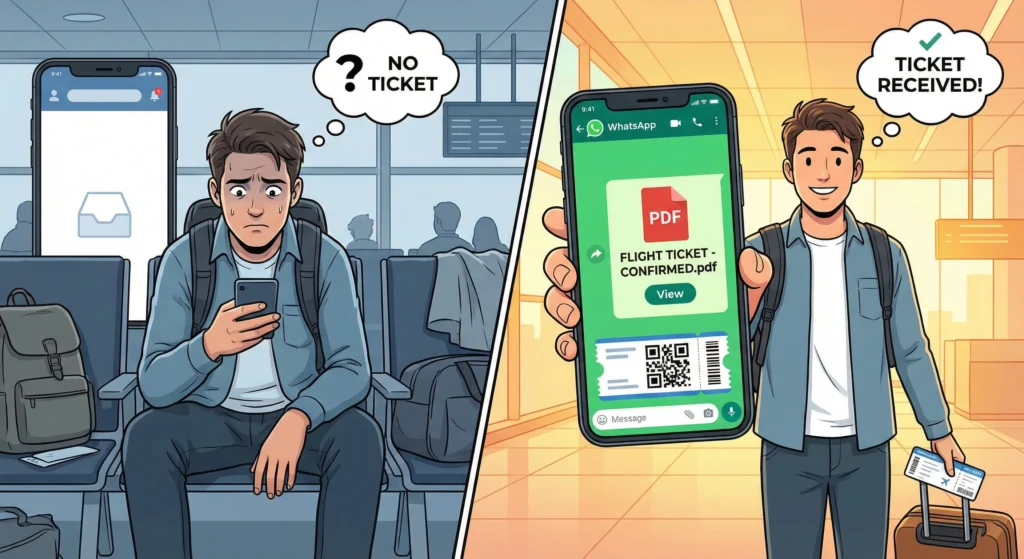
When a customer books a flight, a delay of even five minutes in receiving a confirmation can cause panic. They might think the payment failed or the booking was lost. This comparison analyzes the data to help you decide which path is best for your travel agency.
The Verdict: Direct Meta API vs. Third-party Integrations for Travel Agencies
Travel agencies must weigh the cost of engineering time against the cost of software subscriptions. If you are a large Online Travel Agency (OTA) with a massive IT department, going direct might work. However, for most agencies, third-party platforms provide a faster route to success.
Here is a quick breakdown of how the two options compare on critical metrics.
Summary Table: Latency, Setup Time, and Cost Efficiency for Booking Updates
| Feature | Direct Meta Cloud API | Third-Party Integration (BSP) |
| Setup Time | 4-8 Weeks (Requires Development) | 1-3 Days (Plug-and-Play) |
| Latency (Speed) | Variable (Depends on your server speed) | High Speed (Optimized Servers) |
| Initial Cost | High (Developer Salaries) | Low (Setup Fee or Free) |
| Maintenance | High (You fix bugs) | Low (Provider fixes bugs) |
| Document Delivery | Complex (Manual coding for PDFs) | Simple (Automated Templates) |
Key Takeaway: Build vs. Buy for OTAs and Travel Operators
The decision comes down to a "Build vs. Buy" strategy. Building your own connection (Direct API) gives you ownership of the code, but you must also handle server downtime and updates from Meta. Buying a solution (Third-Party Integration) allows you to focus on selling travel packages while the provider handles the technical connections.
Defining the Ecosystem: Meta Cloud API, Official BSPs, and Unofficial Tools
Understanding the landscape of WhatsApp connectivity is the first step. Not all connections are created equal. You need to know the difference between the source code, official partners, and risky shortcuts.
What is Direct Meta Cloud API Access?
The Direct Meta Cloud API is the raw code provided by Meta (Facebook). It allows developers to send messages through WhatsApp's servers. It is free to access, but it is just a set of codes. It does not have a user interface, a dashboard, or a "Send" button. You have to build all of that yourself.
What are Third-Party Business Solution Providers (BSPs)?
Business Solution Providers (BSPs) are companies authorized by Meta to help businesses use WhatsApp. They wrap the raw API into easy-to-use software. A good BSP handles the technical heavy lifting. For a detailed look at selecting the right one, you can read our guide on Choosing Your WhatsApp Marketing Partner in India. They ensure your messages land in the inbox, not the spam folder.
Why Unofficial Integrations are a Risk for Travel Brands
Some tools promise free or very cheap messaging by mimicking a phone's connection. These are unofficial tools. Using them is dangerous. If WhatsApp detects you are using an unauthorized tool to send flight alerts, they will ban your number. For a travel agency, losing your main contact number is a disaster.

Reliability Showdown: Delivery Rates for Time-Sensitive Flight Updates
In the travel industry, timing is everything. A message about a gate change that arrives 10 minutes late is useless. Reliability measures how often and how fast your messages are delivered.
Analyzing Latency: 5-Second Delays vs. Real-Time Delivery
Latency is the time it takes for a message to go from your system to the customer's phone.
- Direct API: Speed depends on your own server's health. If your server is busy, the message waits.
- Third-Party: These platforms use optimized queues. They prioritize high-priority alerts like "Flight Cancelled" over marketing messages to ensure real-time delivery.
Server Uptime and Redundancy Protocols for Critical Notifications
Redundancy means having a backup plan if a server fails. Third-party platforms often have multiple servers running at once. If one fails, another takes over immediately. If you build a Direct API connection, you must build these backups yourself. Without them, a server crash on a busy holiday weekend could mean thousands of passengers miss their updates.
Feature Comparison: Handling Rich Media and PDF Tickets
Travel confirmations are more than just text. They involve PDF tickets, hotel vouchers, and location maps. The way you send these files changes depending on your integration choice.
The Technical Challenge of Sending Boarding Passes via Direct API
To send a PDF boarding pass using the Direct API, your developers must write code to upload the file to a server, get a specific ID handle, and then send that handle to the customer. It is a multi-step technical process. If the file format is slightly wrong, the message fails.
How Third-Party Integrations Streamline Document Automation
Third-party platforms simplify this. You often just upload the PDF or link your booking system, and the platform handles the conversion and delivery. You can explore various Features that simplify media handling to see how automation saves time.
Rich Messaging Features: Buttons, Lists, and Location Sharing
Travelers love interactive messages.
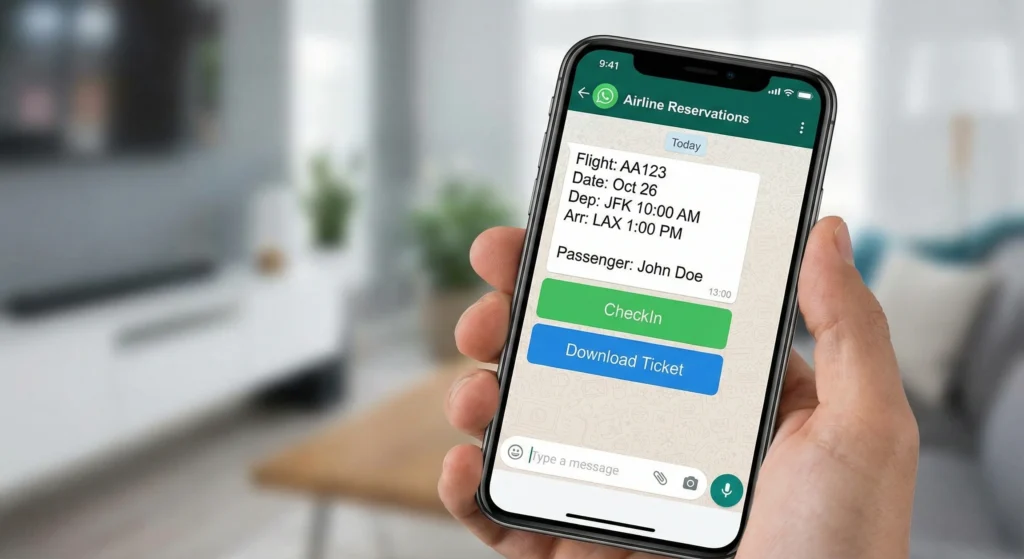
- Quick Reply Buttons: A user can tap "Confirm" or "Reschedule" instantly.
- List Messages: Show a list of available meal options for a flight.
- Location: Send a pin for the hotel pickup point.
Third-party tools usually offer a drag-and-drop editor to create these interactive messages. With Direct API, you must hard-code the JSON (data format) for every button.
Integration & Automation: Connecting with GDS (Amadeus, Sabre) and CRMs
Your WhatsApp messages need to talk to your booking systems. Global Distribution Systems (GDS) like Amadeus or Sabre hold the flight data.
Development Overhead for Custom API Bridges
Connecting the Direct API to Amadeus requires a custom "bridge." Your team must write software that listens to Amadeus for new bookings and then triggers the WhatsApp API. This bridge needs constant maintenance. If Amadeus updates their system, your bridge might break, and you have to fix it immediately.
Pre-built Connectors offered by Third-Party Platforms
Many third-party providers have already built these connectors. They offer "Plug-and Play" integration. You simply enter your API keys, and the systems start talking. This reduces the time to launch from months to days.
Cost Analysis: Total Cost of Ownership (TCO) per Booking Confirmation
It is easy to look at just the message fee, but the real cost includes people and time.
Direct API Costs: Engineering Hours and Server Maintenance
The Direct API is "free" to access, but expensive to run.
- Server Costs: Monthly hosting fees.
- Developer Salaries: You need backend engineers to maintain the code.
- Fixing Bugs: If the API changes, you pay your team to update the code.
Third-Party Integration Costs: Subscription Fees and Support
Third-party solutions charge a subscription fee or a markup on messages. However, this fee covers the server, the maintenance, and the support team. When you look at Waplify's Plans & Pricing, you can see how predictable costs often beat the variable costs of inhouse development.
ROI Calculation: Cost per Successful Check-in Notification
To calculate ROI (Return on Investment), divide your total yearly cost (tech + fees) by the number of successful bookings. Often, the efficiency of a third-party tool lowers the cost per message because fewer messages fail and less staff time is wasted fixing technical errors.
Security and Compliance: Protecting Passenger PII
Passenger Name Records (PNR) and passport details are sensitive data (PII). You must protect them.
Data Encryption Standards: Direct vs. Platform Managed
Both methods use WhatsApp's end-to-end encryption. However, with Direct API, you are responsible for securing the data before it reaches WhatsApp. If your local server is hacked, the data is gone. Third-party platforms invest heavily in enterprise-grade security to prevent this.
Navigating Meta's Commercial Policies and Opt-in Rules
Meta has strict rules about who you can message. You cannot spam people. You need to understand the opt-in rules to keep your account safe. Review the WhatsApp Business API Compliance Checklist 2025 to ensure you are not breaking any rules that could get your travel line blocked.
The Role of Compliance in Account Stability
If you break the rules, Meta lowers your "Quality Rating." If it gets too low, you cannot send messages. Third-party partners monitor this for you and warn you before you hit the danger zone.
Trust Signals: Accelerating Verification for Travel Brands
Trust is the currency of the travel industry. A verified badge proves you are a legitimate business.
Impact of the Green Tick on Booking Confidence
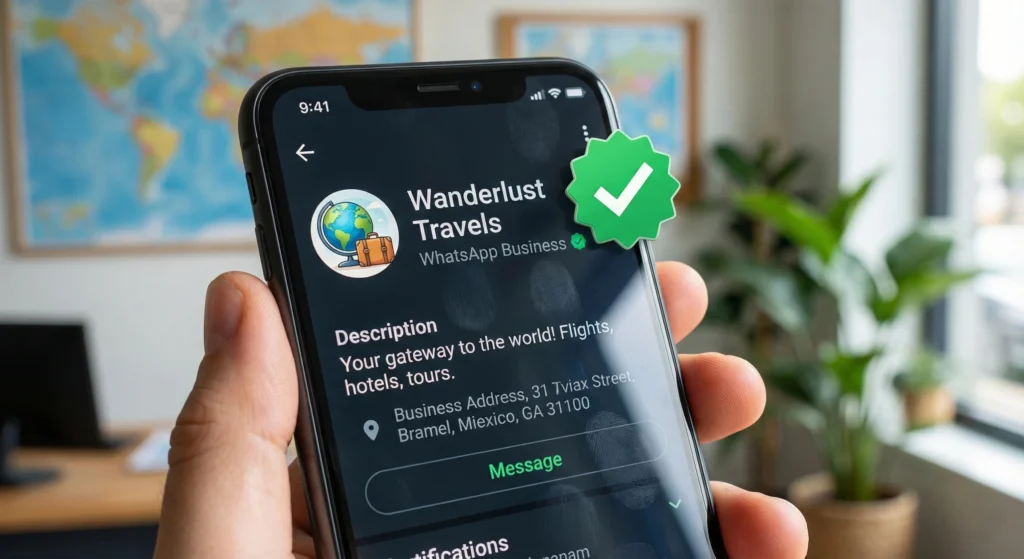
The "Green Tick" next to your business name tells travelers you are authentic. It increases the read rate of your tickets and confirmations. Customers feel safer clicking links from a verified account.
How Third-Party Partners Assist in the Verification Process
Getting the Green Tick can be tricky. Applications are often rejected if not formatted correctly. Partners know exactly what Meta looks for. For a step-by-step breakdown, read the WhatsApp Green Tick 2025: Guide, Eligibility & How to Apply. They can manage the application process to improve your chances of approval.
Expert Analysis: When to Choose Direct API vs. Third-Party Solutions
One size does not fit all. Here are two common scenarios.
Scenario A: High-Tech Enterprise OTAs with In-House Dev Teams
If you are a massive global agency with a team of 50+ developers, using the Direct API might make sense. You have the resources to build a highly custom engine that fits perfectly into your proprietary software. You can justify the ongoing salary costs for total control.
Scenario B: Growing Agencies Requiring Fast Time-to Market
For growing agencies, boutique operators, or mid-sized OTAs, a Third-Party Integration is the smart choice. You get enterprise-level features immediately. You do not need to hire new engineers. You can start sending automated tickets tomorrow, ensuring your customers travel with peace of mind.
Future proofing Your Travel Communication Stack
The travel industry moves fast. Your communication tools must keep up. While the Direct Meta API offers power to those who can build it, Third-Party Integrations offer speed, reliability, and security to those who want to focus on their customers. By choosing a robust partner platform, you ensure your booking confirmations arrive instantly, your data remains secure, and your brand remains trusted.