

Ethical WhatsApp Automation is the strategic use of software to message customers while strictly obeying privacy laws like GDPR and prioritizing user consent. In 2026, WhatsApp Automation requires businesses to be fully transparent about AI bot usage, secure user data with encryption, and only send messages that customers have explicitly asked to receive. Success is no longer just about open rates; it is about building long-term trust by respecting digital boundaries.
The High Stakes of WhatsApp Automation in Business for 2026
The world of business messaging has changed fast. In 2026, WhatsApp is not just a chat app; it is the main way brands talk to people. But with this power comes big responsibility. Users are smarter about their data now. They know when a company is being pushy or unsafe. If you break their trust, you lose them forever.
Regulators have also cracked down. New laws mean that making a mistake with data can cost a company millions in fines. WhatsApp Automation helps you scale, but ‘set it and forget it’ is a dangerous game today. You need to balance speed with safety. This guide explores how to automate your WhatsApp Business API usage without breaking the law or annoying your customers.
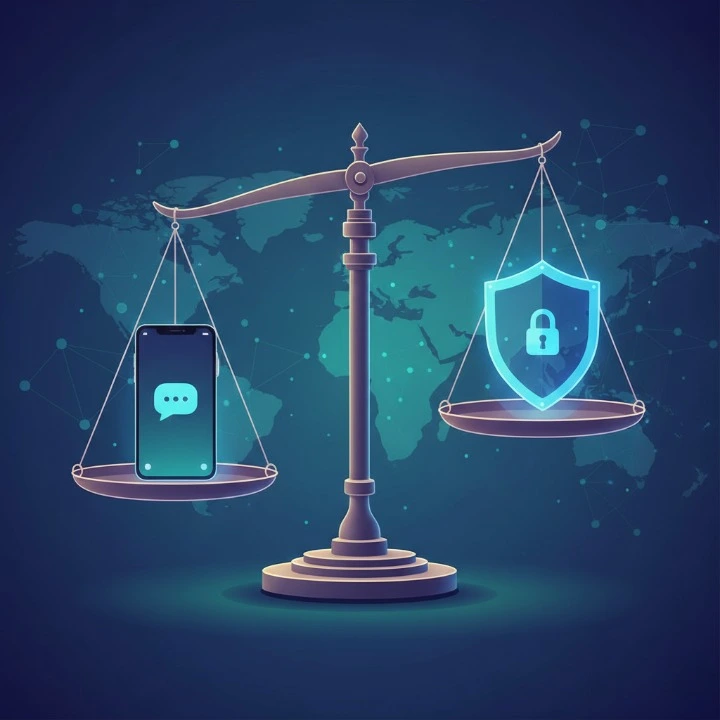
What Constitutes Ethical WhatsApp Automation?
Ethical automation is more than just following the law. It is a commitment to the user’s rights. At its core, it means you never trick a user into receiving messages. You must be clear about who you are and what you will do with their phone number.
Real ethical automation follows three main rules:
- Explicit Consent: The user must say “yes” clearly before you send the first message.
- Honesty: You must admit when a user is talking to a bot, not a human.
- Control: The user must be able to stop messages easily at any time.
If your automation strategy hides the “unsubscribe” button or spams users daily, it is unethical. In 2026, these bad habits will get your number blocked or banned quickly.
Understanding WhatsApp Automation for Business
Before fixing your compliance, you must understand the tools. WhatsApp automation uses software to send messages, reply to queries, and manage contacts without human help. This happens through the WhatsApp Business API. The API allows big companies to connect WhatsApp to their own systems. This connection facilitates scalable WhatsApp automation, letting you send thousands of messages at once. However, how you use this power defines your success.
WhatsApp Marketing Automation vs. Operational Automation
There are two main types of automated messages. You must treat them differently.
- Marketing Automation: These are promotional messages. They include discount offers, product launches, or newsletters. These are strict. You need permission to send them. Users tolerate them less, so you must be careful not to spam.
- Operational Automation: These are utility messages. They include order receipts, shipping updates, or appointment reminders. Users expect these. They are helpful and usually have higher read rates.
The Evolution of the WhatsApp Business API Ecosystem
In the past, WhatsApp was just for chatting. Now, it is a full marketing platform. Over the last few years, Meta (the owner of WhatsApp) has opened up more features. You can now buy products and book seats right inside the chat.
This growth brought more rules. Meta now tracks how fast you reply and how often users block you. The system is smarter. It can tell the difference between a helpful bot and a spam bot. Adapting to this ecosystem is key for survival.
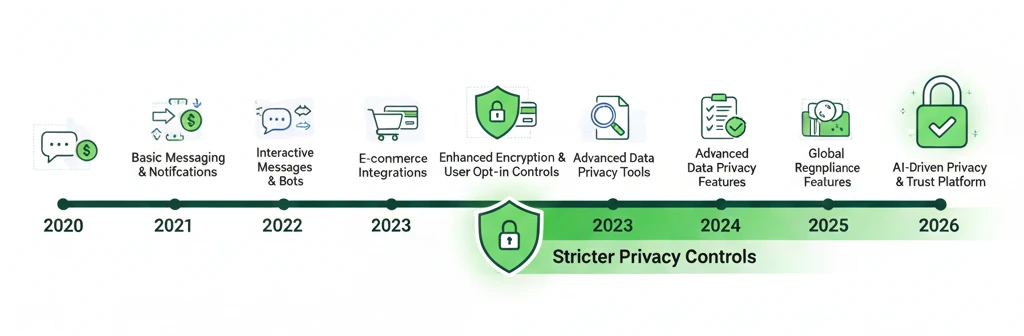
The 2026 Regulatory Landscape: Compliance Essentials
Laws regarding digital privacy are stricter than ever. Governments want to protect citizens from spam and data theft. Ignoring these laws is not an option.
You must know the rules of the road. If you operate in multiple countries, you have to follow the laws of the place where your customer lives, not just where your business is.
WhatsApp Business Automation Legal Requirements: GDPR, CCPA, and Beyond
The General Data Protection Regulation (GDPR) in Europe and the California Consumer Privacy Act (CCPA) in the USA set the standard.
- GDPR: You must have a legal reason to process data. Consent is the best reason for marketing. You cannot assume a user wants messages just because they bought something five years ago.
- CCPA: Users have the right to know what data you have on them. They can ask you to delete it.
For a look at previous standards and how they led to today’s rules, check our WhatsApp Business Api Compliance 2025 Checklist to see how things have evolved.
Navigating Meta’s 2026 Commercial Policy Updates
Meta has its own set of laws. These are the Commercial Policies. In 2026, Meta focuses heavily on user feedback. If users report your messages, Meta will limit your account. New updates restrict certain industries more than others. For example, selling medical items or subscription services on WhatsApp requires extra verification. You must also keep your business profile updated with accurate contact info.
Essential WhatsApp Business API Compliance Steps
Use this list to make sure you are safe:
- [ ] Get Opt-In: Ensure you have a record of when and how a user agreed to receive messages.
- [ ] Update Legal Docs: Mention WhatsApp specifically in your privacy policy.
- [ ] Clear Opt-Out: Every marketing message must have a way to stop receiving them (like a “Stop” button).
- [ ] Template Approval: Submit all message templates to WhatsApp for review before sending.
- [ ] Respect Time Zones: Do not send automated messages at 3 AM user time.
Data Privacy Best Practices for 2026
Data is valuable, but it is also dangerous if leaked. Protecting customer data is the foundation of trust.
You must treat a phone number like a house key. You do not give it to strangers, and you do not use it to enter without asking.
Data Collection Limits and Purpose Limitation Principles
Collect only what you need. This is the principle of Purpose Limitation. If you only need a phone number to send a shipping update, do not ask for their birthday or home address.
Collecting too much data makes you a target for hackers. It also makes customers suspicious. Explain why you need the data. “We need your number to send your ticket” is a good reason. “We need your number for records” is vague and scary.
How the Signal Protocol Protects Business Data
WhatsApp uses the Signal Protocol for end-to-end encryption. This means only you and the customer can read the messages. Meta cannot read them, and hackers cannot intercept them easily.
However, once the data hits your CRM (Customer Relationship Management) software, it might not be encrypted anymore. You must ensure your own database is secure.
Balancing Analytics with User Privacy
Do not keep data forever. A good retention policy states how long you keep chat logs. Maybe you keep them for one year to help with customer service history. After that, you should delete or anonymize them.
You should clearly outline how you handle data, similar to the Waplify.io Privacy Policy: Data Collection, Use & Security, so users feel safe.
Data Controller vs. Data Processor Responsibilities
In data law, there are two main roles. You need to know which one you are.
| Feature | Data Controller (The Business) | Data Processor (The Software/Waplify.io) |
| Role | Decides why and how to send messages | Acts on behalf of the controller to send messages. |
| Responsibility | Must get consent from the user. | Must secure the technical infrastructure. |
| Liability | Liable for spamming or misuse of data. | Liable for data breaches or leaks. |
| Ownership | Owns the customer relationship. | Does not own the data; simply processes it. |
The Ethics of AI and User Trust
Artificial Intelligence (AI) powers many WhatsApp bots. AI can write answers that sound like a human. This creates a new ethical problem.
Users feel betrayed if they spend ten minutes talking to someone, only to realize it was a machine. Honesty is the best policy here.
Disclosing Bot Identity vs. Human Handoffs
Always tell the user they are speaking to a bot. You can give the bot a name, like “HelpBot” or “Virtual Assistant.”
- Initial Greeting: Start with “Hi! I am the automated assistant.”
- Human Handoff: If the bot cannot answer, it should say, “Let me get a human to help you.”
This transparency reduces frustration. Users forgive a bot for being dumb. They do not forgive a business for lying.
Moral Implications of AI Mimicking Human Empathy
The “Uncanny Valley” is a creepy feeling people get when a robot acts almost human but not quite. Do not program your bot to fake emotions.
If a customer is angry, a bot saying “I deeply understand your pain” feels fake. It is better for the bot to be functional: “I see you are upset. I am escalating this ticket to a manager immediately.”
Frequency Capping and Respecting User Boundaries
Just because you can message a user every day doesn’t mean you should. Frequency capping limits how many messages a user gets in a week.
- Rule of Thumb: No more than 1-2 marketing messages per week.
- Smart Scheduling: If a user hasn’t opened your last three messages, stop sending them. They are not interested right now.
Building Consent into Code
Ethics must be part of your code, not just your policy documents. Your developers need to build systems that respect user choices automatically.
This ensures that human error does not lead to a lawsuit. If the code checks for consent before sending, you are safe.
Designing Granular Opt-In Flows for Higher Conversion
Don’t just ask “Can we message you?” Ask specifically. This is called Granular Consent.
- “Check here for Order Updates.”
- “Check here for Weekly Offers.”
Users are more likely to say yes to order updates. If you bundle everything together, they might say no to everything just to avoid the spam. Always define the rules of engagement in your legal text, like the
Waplify.io Terms & Conditions | Usage, Billing, Legal Terms.
The Right to be Forgotten in WhatsApp Automation
When a user types “STOP”, your system must react instantly. It should block that number from receiving future marketing templates automatically.
This is the “Right to be Forgotten.” If you keep messaging them after they opted out, you are violating GDPR and Meta’s policies.
Storing Consent Proofs within CRM Integrations
You need proof. In your customer database, create a field for “Consent Source” and “Consent Date.”
- Example Record:
- User: +123456789
- Status: Opted-In
- Source: Website Checkout Checkbox
- Date: 2026-05-12
If a regulator asks, you can show this record as proof.
Avoiding Bans and Quality Penalties
Meta assigns a score to your phone number. This is your Quality Rating. If it drops, your WhatsApp automation will fail. Risk management is about keeping this score high. It protects your ability to do business.
Understanding the WhatsApp Quality Rating System
Your rating is based on recent messages. It is Green (High), Yellow (Medium), or Red (Low).
- Green: You are doing great.
- Yellow: Warning zone. Meta might limit how many messages you can send.
- Red: Danger zone. You might get blocked.
To stay safe, you must understand what triggers a drop in quality Whatsapp Quality Rating Guide. It explains exactly
WhatsApp Automation: The Fallout of Aggressive Strategies
Imagine a company that bought a list of phone numbers and sent a blast message to 10,000 people.
- Result: 2,000 people reported the message as spam.
- Consequence: Meta blocked the number permanently. The company lost its communication channel and faced fines for using non-consented data.
- Lesson: Never buy lists. Only message people who contacted you.
Securing the WhatsApp Green Tick in 2026
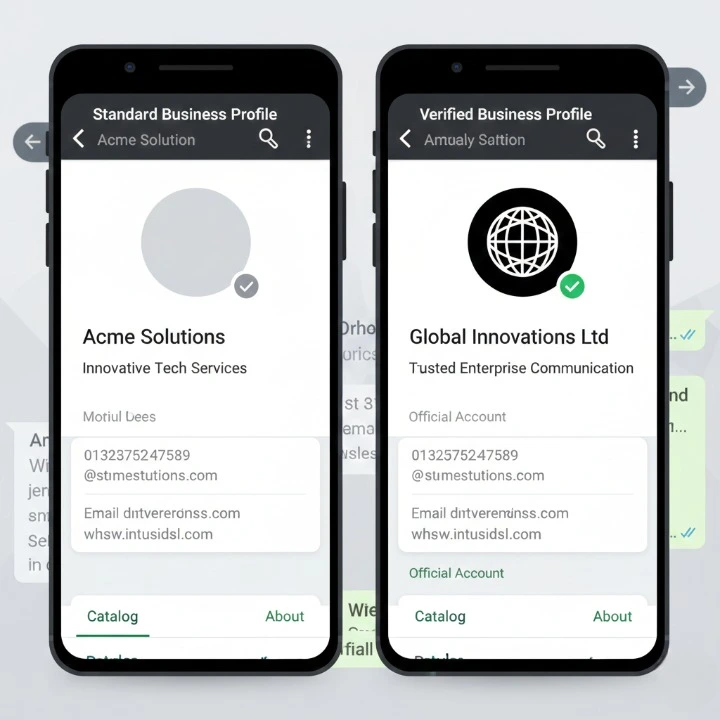
The Green Tick next to your name means you are an Official Business Account. It proves you are authentic. In 2026, Meta uses your quality score to decide if you get the tick.
Trust is a key metric for getting verified. If you have a history of spam, you will not get verified. Learn more in our Whatsapp Green Tick 2026 Guide.
The ROI of Ethical Automation
Ethical automation is not just about avoiding fines. It actually makes you more money.
- Higher Open Rates: People open messages from brands they trust.
- Lower Costs: You stop wasting money sending messages to people who don’t want them.
- Better Retention: Customers stay longer when you respect their boundaries.
- Brand Safety: You avoid the embarrassment of being labeled a spammer.
Future-Proofing Your Business Messaging Strategy
The future of WhatsApp Automation in 2026 is built on permission and privacy. The days of ‘blast and pray’ are over. To succeed, you must view the customer’s phone as a private space that you are invited into. By following the rules of consent, being transparent about AI, and respecting data privacy, you future-proof your business. You build a list of loyal customers who actually look forward to hearing from you. Start auditing your WhatsApp Automation flows today to ensure you are ready for the standards of tomorrow.