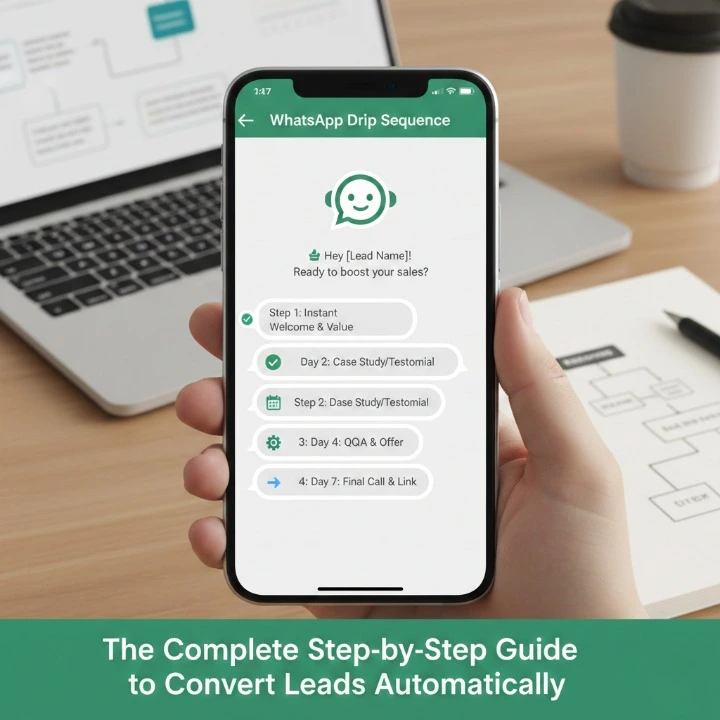
In today’s fast digital world, we need a simple and smart way to follow up with our customers. Many leads come in, but most of them forget about us if we do not stay in touch. This is where a WhatsApp drip sequence becomes powerful.
A drip sequence on WhatsApp helps us send planned messages automatically over time. It builds trust, gives value, and gently guides people toward buying, booking, or taking action. In this guide, we explain everything in a clear and easy way so anyone can understand and apply it.
What Is a WhatsApp Drip Sequence?
A WhatsApp drip sequence is a series of automated messages sent to users at fixed time gaps. These messages are not random. They are carefully planned to:
- Welcome new users
- Educate them
- Build trust
- Answer common doubts
- Offer a product or service
- Follow up until conversion
Instead of sending one big message, we send small messages step by step. This keeps the user interested and not overwhelmed.
For official details about WhatsApp Business features, visit:
https://business.whatsapp.com/
Why We Should Use a WhatsApp Drip Sequence Campaign
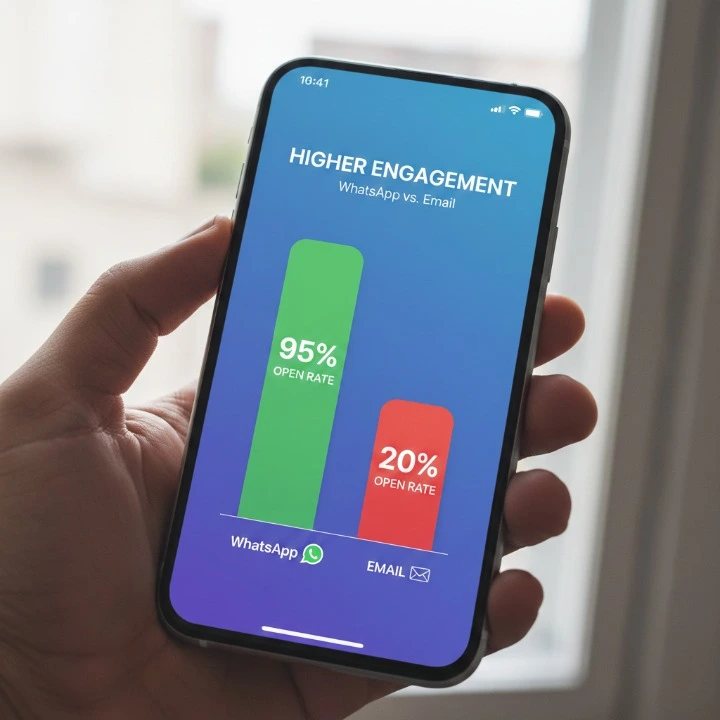
Sending just one message may leave our recipients with no option but to ignore. However, when we share an ongoing series of our helpful messages regularly, the end result is an improvement in our overall performance.
What a structured WhatsApp message sequence can achieve is:
- An increase in response rates.
- An increase in conversion rates.
- A time-saving measure due to the automation taking care of our follow-ups on our behalf.
- An opportunity to create a long-term relationship with the recipient by providing a step-by-step process rather than simply trying to sell them something immediately.
For marketing automation insights, you can explore:
https://www.hubspot.com/
How WhatsApp Drip Sequence Works (Simple Breakdown)
We can take an in-depth look at the entire process:
1) A user submits a form or taps on a WhatsApp advertisement.
2) The user provides their consent to receive communications.
3) Automated communications are triggered by our marketing automation system (due to user consent).
4) The automated communications go out as scheduled.
5) The user responds to the communication (via reply or via click through).
6) User responses are tracked by the marketing automation system.
7) Easy and effective.
Best Structure for a High-Converting WhatsApp Drip Sequence
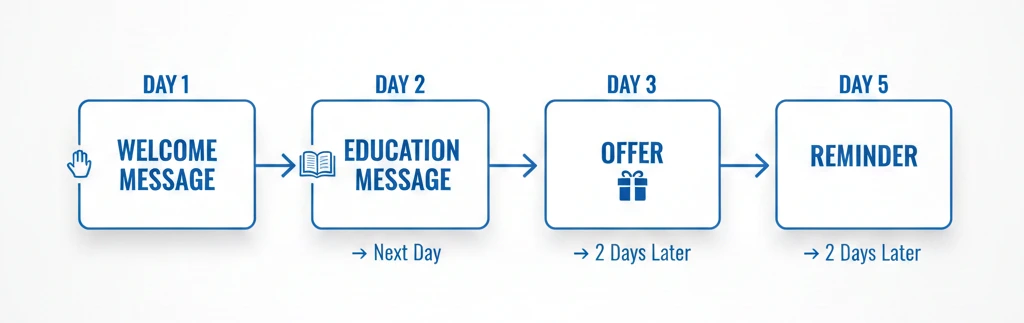
To rank higher and perform better, structure matters. Below is a proven format:
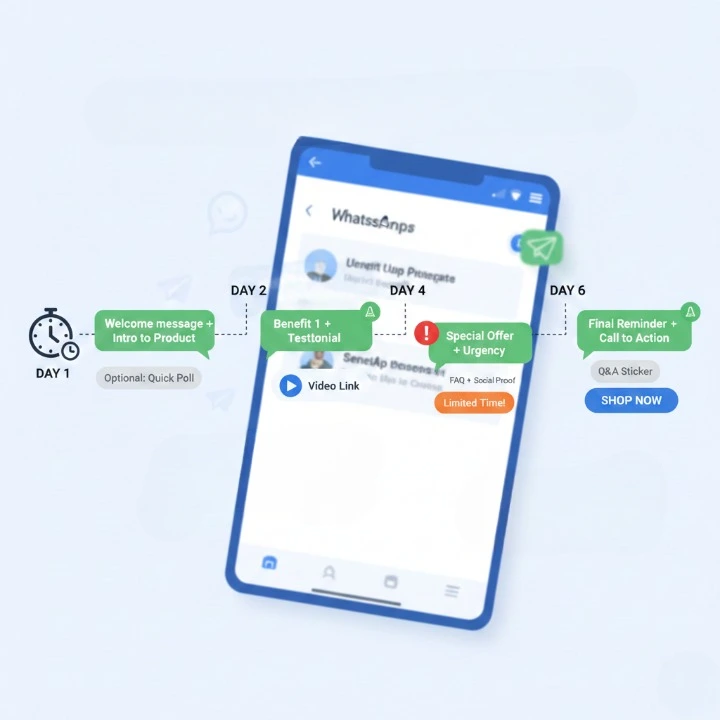
Day 1 – Welcome Message
We greet the user and tell them what they can expect.
Example:
Hi 👋 Thanks for joining us. We are excited to help you. Over the next few days, we will share useful tips and offers.
Keep it short and friendly.
Day 2 – Value Message
We share helpful information.
Example:
Did you know most people lose customers because they don’t follow up? We help fix that.
Add a small tip.
Day 3 – Social Proof
We show trust signals.
Example:
500+ businesses use our solution daily.
Testimonials increase confidence.
Day 4 – Offer or Call to Action
Now we gently present the offer.
Example:
Ready to grow your business? Click here to get started.
Day 6 – Reminder
People forget. Remind them politely.
Example:
Just checking in. Let us know if you have any questions.
Essential Components for a Successful WhatsApp Drip Sequence
In order to improve our rankings and performance, we must consider the following:
- Clear Messaging Objectives: Every message sent must have an uncomplicated objective/goal.
- Concise Copy: Messages must be made legible.
- Personalization: Use your customers’ name when communicating with them.
- Appropriate Timing: Avoid sending multiple messages in one day.
- Defined Call to Action: Provide direction about what action will be taken upon receipt of the message.
Common Mistakes to Avoid
Many businesses fail because they:
- Send too many promotional messages
- Ignore user replies
- Do not segment their audience
- Use complicated language
- Forget to test the sequence
Keep everything simple and helpful.
How to Create a WhatsApp Drip Sequence Step by Step
Step 1: Define the Goal
Do we want signups, sales, bookings, or demo calls?
Step 2: Segment the Audience
New leads need different messages than old customers.
Step 3: Write 5–7 Messages
Keep them short and valuable.
Step 4: Schedule Time Gaps
1 day gap works well in most cases.
Step 5: Test and Improve
Track clicks and replies.
For marketing analytics guidance:
https://analytics.google.com/

Using Automation Tools for WhatsApp Drip Sequence Campaigns
Automating message delivery instead of sending manually is not feasible; we want to use automated tools to deliver:
- Predefined messages
- Plans for sending messages in advance
- Separate users based on certain parameters
- Methods to track user behavior with data
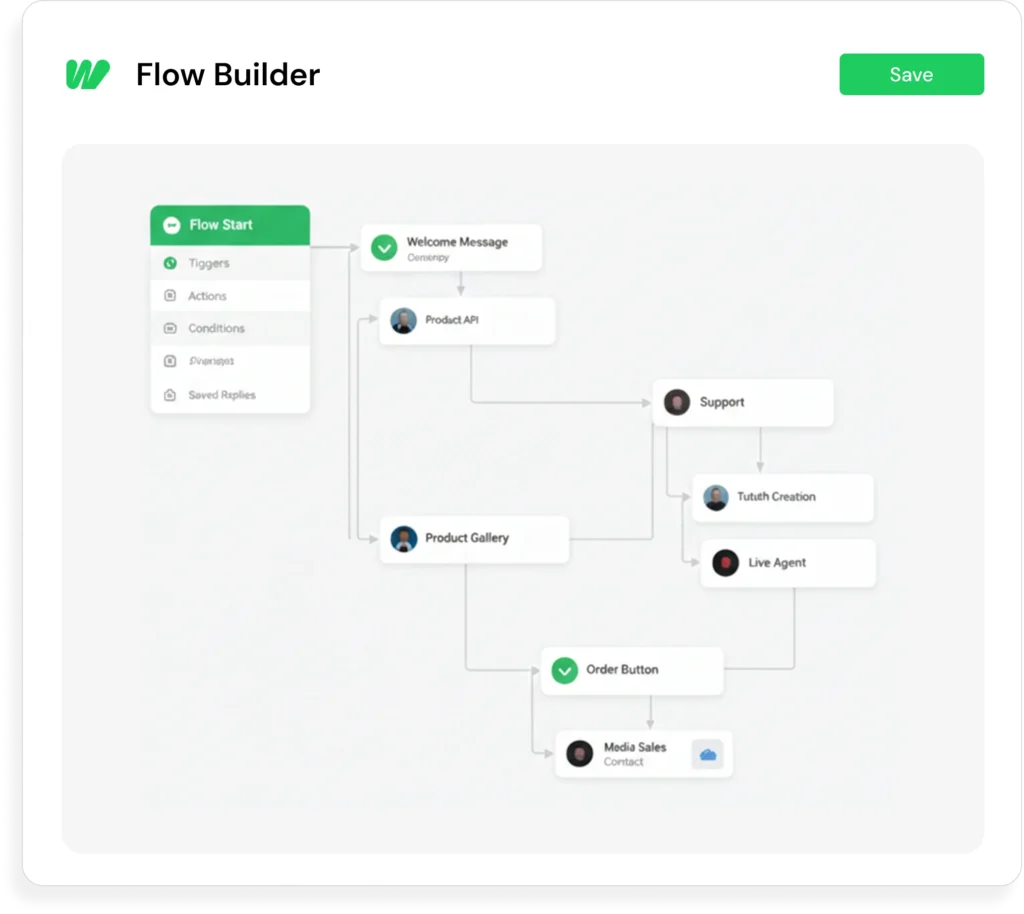
We can also use tools like Waplify to build cohesive WhatsApp campaigns through having the ability to manage bulk messaging, automate step-by-step message delivery and segment our audience’s based on their characteristics. Having a tool like Waplify will make the process of creating a drip campaign much easier to execute and help us see better success from it.
WhatsApp Drip Sequence for Different Industries
1. E-commerce
- Welcome message
- Product recommendations
- Discount reminder
- Cart recovery message
2. Education
- Course introduction
- Benefits
- Student reviews
- Enrollment deadline
3. Real Estate
- Property details
- Site visit reminder
- Price update
- Follow-up
4. Coaching & Consulting
- Free guide
- Problem awareness
- Client success story
- Consultation booking
Each industry can adjust message timing based on buying cycle.
SEO Points to Help This Blog Rank Higher
To ensure strong Google ranking:
- Use natural keyword placement
- Add helpful internal links
- Include FAQ section
- Provide clear headings
- Keep paragraphs easy to read
- Add image alt text with relevant context
- Improve user engagement
Quality and clarity win every time.
Frequently Asked Questions (FAQ)
1. What is the optimal number of messages for a WhatsApp drip sequence?
The optimum number of messages typically falls between 4 and 7. The number can change depending on the goal of the business.
2. How often should messages be posted?
Once a day or every second day generally works well – it is important not to send too many messages.
3. Is it legal to automate WhatsApp drip campaigns?
Yes, it is legal as long as users consent and we comply with WhatsApp Business policy.
4. Do WhatsApp drip sequences contribute to increasing sales?
Yes, repeat messaging develops customer trust and ultimately increases the conversion rate.
5. What’s the difference between bulk and drip messaging?
Bulk messaging is sending one message to everyone simultaneously; drip messaging sends many messages over time via scheduled delivery.
Final Thoughts
Using automated systems to set up a drip campaign in WhatsApp to keep in touch or nurture leads without being overly pushy about closing sales or trying to sell. By sending prospects helpful content with a clear message, concise messaging and that are spaced out correctly by timing can help yield better results.
We can have a very effective system working for us around the clock through automation tools, personalisation of content, and providing users with value. The result will ultimately save you time, develop trust and give you a constant increase in revenue.