
The Definitive Guide to B2B WhatsApp Lead Generation Strategies: A 5-Step Framework
The B2B WhatsApp Lead Generation Framework is a structured sales process designed to move high-ticket prospects from initial contact to a signed contract using mobile messaging. Instead of relying on sporadic chats, this method uses five specific stages: Infrastructure Setup, Lead Capture, Smart Segmentation, Permission-Based Outreach, and Conversion. This strategy replaces declining cold email tactics with a channel that offers higher engagement and faster response times.
The Shift from Inbox Zero to WhatsApp First
Sales teams are facing a major problem. The old way of sending cold emails is stopping working. Open rates are dropping, and spam filters are getting smarter. Decision-makers receive hundreds of emails a day, but they check their phones constantly. This is the shift from trying to reach "Inbox Zero" to a "WhatsApp First" mentality.
In B2B sales, trust is everything. Sending random messages without a plan looks unprofessional. It can even get your number banned. A structured framework ensures you build relationships properly. It turns a casual chat app into a powerful revenue engine. By following a strict process, businesses can secure high-ticket deals that used to require months of email follow-ups.
The 5-Step B2B WhatsApp Lead Gen Framework
This framework transforms WhatsApp from a support tool into a proactive sales channel. It is built on the idea that B2B buyers want quick answers and direct lines of communication.
Below is the executive summary of the strategy. This table outlines the goal and action required for each of the five steps.
| Step | Phase Name | Primary Goal | Key Action |
| 1 | Infrastructure | Prevent bans and ensure stability. | Verify Business Manager & connect API. |
| 2 | Capture | Get prospects to start the chat. | Deploy Click-to-WhatsApp ads & QR codes. |
| 3 | Segmentation | Sort leads by intent level. | Use tags to separate "Browsers" from "Buyers." |
| 4 | Outreach | Start conversations respectfully. | Send "Soft Opener" messages to opt-ins. |
| 5 | Conversion | Close the deal. | Hand off hot leads to human agents. |
Defining the core difference between B2C and B2B WhatsApp strategies
Business-to-Consumer (B2C) strategies focus on volume. They blast coupons to thousands of people to get small purchases. B2B strategies are different. They focus on relationships. The goal isn't a quick $50 sale. The goal is to start a conversation that leads to a $10,000 contract. B2B requires patience, permission, and personalized content.
Why WhatsApp Dominates the B2B Sales Funnel
WhatsApp is currently the most effective channel for reaching decision-makers. The data proves that mobile messaging beats email in almost every metric that matters for sales.
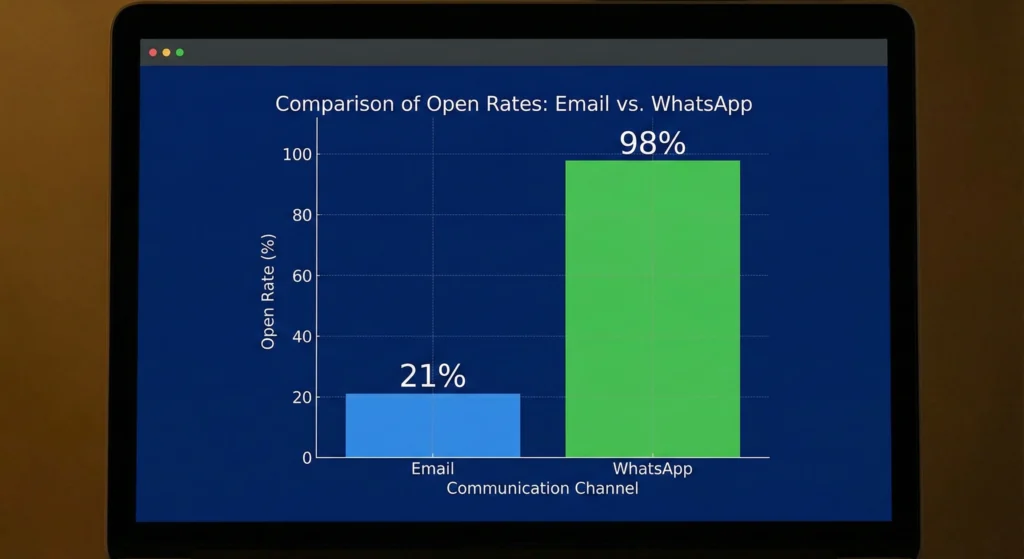
Data Breakdown: WhatsApp (98% Open Rate) vs. Email (21% Open Rate)
The numbers are clear. Traditional email has an average open rate of about 21%. This means 8 out of 10 prospects never even see your pitch. WhatsApp has a 98% open rate. Almost every message you send gets read. Furthermore, the response time on WhatsApp is usually under 90 seconds, compared to 90 minutes or more for email.
The psychology of 'Conversational Qualifiers' in high-ticket deals
In high-ticket sales, you need to qualify leads quickly. Long forms on websites often scare people away. On WhatsApp, you can use "Conversational Qualifiers." These are short, low-pressure questions asked one by one. It feels like a chat, not an interrogation. This psychology lowers the barrier to entry and builds trust faster.
Case for shifting SDR workflows to mobile-first channels
Sales Development Representatives (SDRs) spend hours dialing phones that no one answers. Shifting to a mobile-first workflow allows SDRs to manage multiple conversations at once. They can nurture leads while waiting for replies. This increases the total number of touchpoints an SDR can handle in a single day.
Step 1: Establish a Ban-Proof Technical Infrastructure
You cannot run a serious B2B operation on a personal WhatsApp account. You risk losing your data and getting your number blocked. You must build a professional technical foundation first.
WhatsApp Business App vs. WhatsApp Business API: Which do you need?
The free Business App is fine for a local bakery. It is not enough for a B2B sales team. It has limits on broadcast lists and automation. For lead generation, you need the WhatsApp Business API. The API allows for unlimited scaling, team inboxes, and advanced automation software integration.
Compliance Checklist: Verifying Meta Business Manager
To use the API safely, you must look legitimate to Meta (Facebook).
- Verify your Business Manager: Submit your business license and details to Meta.
- Display Name: Ensure your WhatsApp display name matches your legal business name.
- Website: Have a working website with a privacy policy.
Selecting the right software: Utilizing Waplify for stable API connections
You cannot access the API directly; you need a dashboard to manage it. This is where tools like Waplify come in. Choosing the right software ensures your connection is stable and your messages are delivered. A good platform handles the technical "handshake" with Meta so you can focus on selling.
Step 2: Deploy Inbound Lead Capture Magnets
Never buy a list of phone numbers and spam them. That is illegal and ineffective. You must get the prospect to message you first. This is called "Inbound Lead Capture."
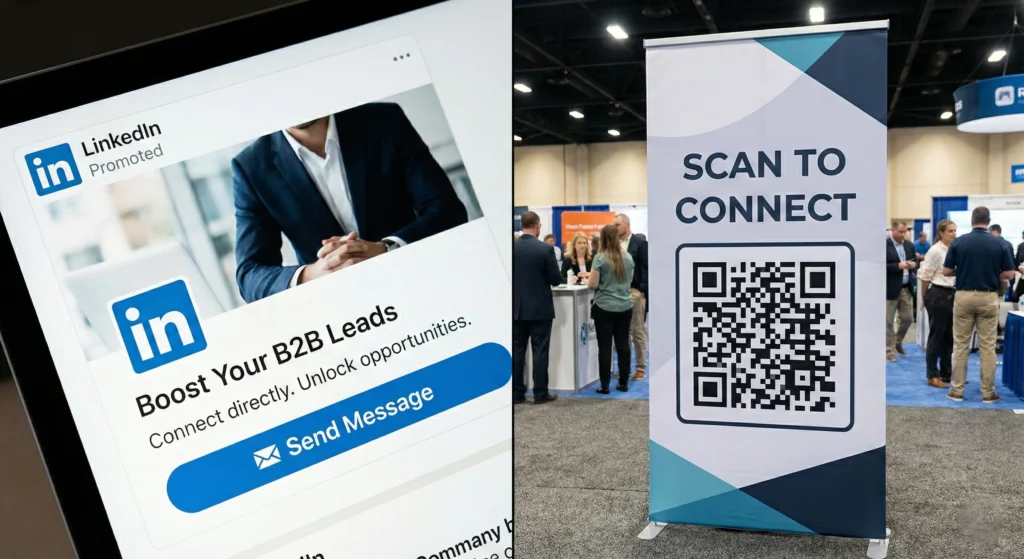
Click-to-WhatsApp Ads vs. Landing Page Forms
Instead of asking people to fill out a form and wait for an email, use Click-to-WhatsApp Ads. When a user clicks the ad, their WhatsApp opens with a pre-filled message. This removes friction. The lead is captured the moment they hit "send."
Using QR Codes for effective event and trade show lead capture
Trade shows are chaotic. Business cards get lost. Smart sales teams print QR codes on their booths or flyers. When scanned, these codes start a WhatsApp chat. You can instantly send the prospect a digital brochure or pricing sheet while they are still standing in front of you.
Embedding 'Chat with Sales' buttons on Waplify Industry-specific pages
Your website should make it easy to chat. Placing a Getgabs WhatsApp chat widget on your site allows visitors to ask questions instantly. Different sectors have different needs. You can see how this works across various verticals by exploring the industry use cases. Tailoring the "welcome message" based on the page they are viewing increases engagement.
Step 3: Smart Segmentation and Automated Nurturing
Once a lead messages you, you must organize them. Not all leads are ready to buy immediately. Segmentation helps you send the right message to the right person.
How to tag and segment leads based on intent (Cold vs. Warm)
Use a tagging system.
- Cold Lead: Just asked for a price, no other interaction.
- Warm Lead: Asked specific questions about features.
- Hot Lead: Requested a demo or meeting.
By tagging leads, you ensure you don't annoy a "Cold" lead with aggressive closing tactics.
Leveraging Waplify Features for automated drip sequences
Automation saves time. You can set up "drip sequences" that send messages automatically over time. Using advanced Features within your software allows you to build these flows visually. For example, if a lead downloads a guide but doesn't book a call, the system can follow up automatically two days later.
3 Automation Workflows that nurture without annoying prospects
- The "Instant Gratification" Workflow: Immediately delivers the requested PDF or price list. Follows up 15 minutes later to ask, "Did you get the file okay?"
- The "Educational Drip": Sends one helpful tip every 3 days. Focuses on value, not selling.
- The "Re-engagement" Ping: If a warm lead goes silent for 7 days, the system sends a short message: "Hi [Name], are you still looking for help with [Problem]?"
Step 4: The 'Permission-First' Outreach Strategy
B2B professionals guard their time. You must respect their inbox. This step focuses on how to talk to leads without being marked as spam.
The danger of cold broadcasting and how to avoid spam flags
Sending the same message to 1,000 people at once is dangerous. If too many people block you, WhatsApp will ban your number. Always ensure the user has opted-in or messaged you first. Keep your "block rate" low by sending content that is actually useful.
The 'Soft Opener' for new connections
Use this when reaching out to a lead who just opted in via a form or event.
"Hi [Name], this is [Your Name] from [Company]. I saw you downloaded our guide on [Topic]. Just wanted to say thanks! I'm here if you have any specific questions about it. No rush."
The 'Value-Add' follow-up for unresponsive leads
Use this if they haven't replied in a week.
"Hi [Name], I found this new case study about [Industry Topic] and thought of your project. It might give you some ideas on solving [Pain Point]. Here is the link. Let me know what you think!"
Step 5: Conversion – From Chat to Signed Contract
The final step is moving the conversation off the chat and into a contract. Automation handles the start, but humans handle the finish.
The Handoff: When to switch from Automation to Human SDR
Automation should handle FAQs and brochures. As soon as a lead asks a complex question or discusses pricing budgets, a human SDR must take over. The transition should be smooth. The agent should read the chat history first, so the client does not have to repeat themselves.
Scheduling demos directly within the WhatsApp Interface
Don't make them click away to a calendar if you can avoid it. Or simply drop your calendar link directly in the chat. "Does Tuesday at 2 PM work for a quick demo? Here is my calendar link to confirm: [Link]." The speed of agreement is much faster on WhatsApp than email back-and-forth.
Measuring Success: Moving beyond Open Rates to Opportunity-to-Close ratios
Open rates are vanity metrics. In B2B, you care about revenue. Measure your Opportunity-to-Close ratio. How many WhatsApp conversations turn into booked meetings? How many of those meetings turn into signed deals? This data tells you if your messaging is actually working.
Expert Analysis: Mitigating Risk in B2B Messaging
Using WhatsApp for business comes with rules. Ignoring them can cost you money and your reputation.
GDPR and opt-in compliance for B2B
In Europe and many other regions, GDPR is strict. You generally cannot message someone on WhatsApp without their consent. Always include a checkbox on your forms that says, "I agree to be contacted via WhatsApp." Keep a record of this consent.
Analysis of common pitfalls that cause number banning
- Sending too many messages too fast: Ramping up volume too quickly triggers alarms.
- High block rates: If people report you, your "Health Score" drops.
- Promotional spam: Sending "Buy Now!" messages to cold leads is a sure way to get banned. Stick to educational content first.
Cost Analysis: Maximizing ROI on Your Tech Stack
Software costs can eat into your profits if you aren't careful. You need to analyze how you pay for your tools.
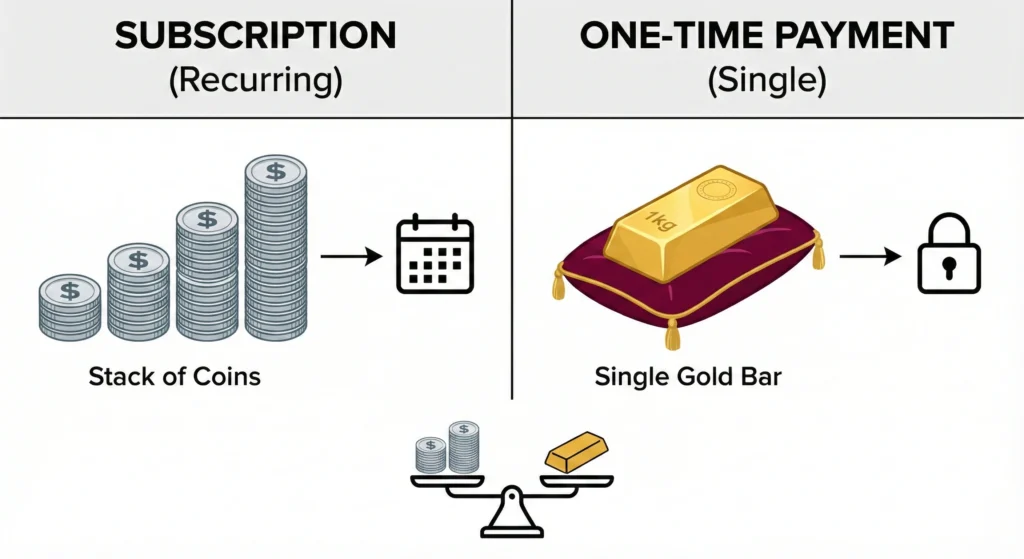
Monthly Subscription Models vs. One-Time Payment Software
| Cost Model | Monthly Cost | Annual Cost (Est.) | 5-Year Cost (Est.) |
| SaaS Subscription | $99/mo | $1,188 | $5,940 |
| One-Time Payment | $0/mo | $0 | $0 (Paid once upfront) |
Understanding the long-term savings with Waplify Plans & Pricing
Most software charges you every single month. Over a few years, this adds up to thousands of dollars. Some platforms offer a different model. By reviewing Waplify's Plans & Pricing, you can see how paying once for the software license reduces your overhead. This improves your ROI significantly, as you only pay for the WhatsApp conversation fees charged by Meta, not the tool itself.
Implementing the Framework Today
The transition to mobile-first sales is not a trend; it is the new standard. By adopting this framework, you position your B2B company to meet buyers where they are.
Recap of the 5 steps
- Infrastructure: secure your API.
- Capture: drive inbound leads via ads and QR codes.
- Segmentation: tag and nurture automatically.
- Outreach: use permission-based, soft openers.
- Conversion: hand off to humans to close the deal.
Adopting the Waplify ecosystem
To execute this strategy effectively, you need reliable tools. Don't let technical hurdles slow down your sales team. Explore the Waplify ecosystem today to secure a stable, cost-effective platform for your B2B WhatsApp lead generation. Start building relationships that turn into revenue.