
WhatsApp for Insurance Agents: A 2026 Compliance Checklist & Best Practices
WhatsApp is compliant for insurance agents in 2026 only if they utilize the WhatsApp Business API rather than the personal or standard business app. To meet modern regulatory standards, agencies must implement centralized archiving, enforce automatic PII (Personally Identifiable Information) redaction, and secure explicit opt-in consent that covers AI-assisted interactions. Agents using personal devices for client
communication without these safeguards now face severe penalties under updated global financial regulations.
The High Stakes of Insurance Communication in 2026
The insurance industry has shifted permanently to instant messaging. Clients expect updates on their phones, not in their mailboxes. However, the regulatory landscape has tightened significantly. Governments and oversight bodies now treat WhatsApp messages exactly like official emails or recorded phone calls.
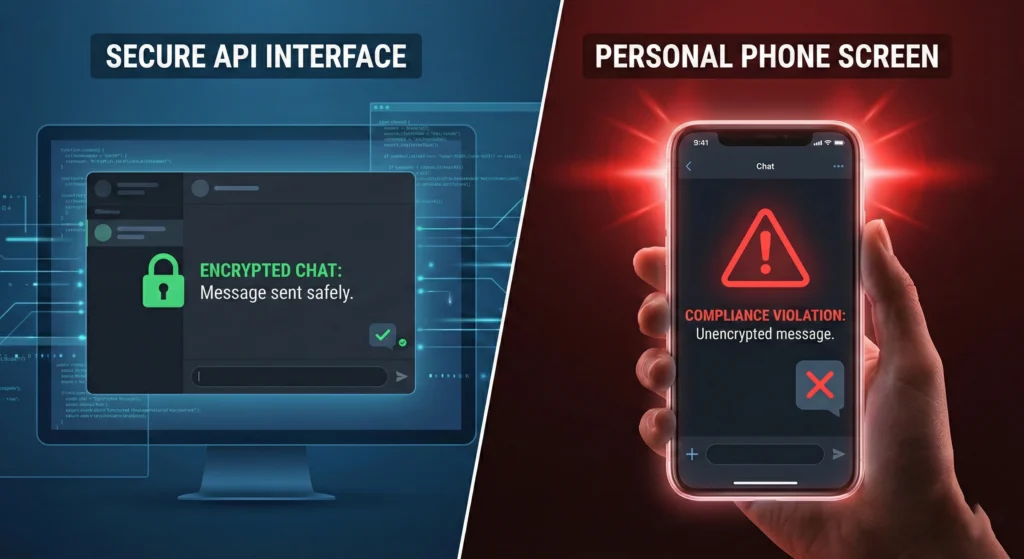
This shift creates high stakes for agents. A single unrecorded message promising coverage or a leaked policy number can lead to license suspension. The convenience of chat must be balanced with strict data governance. This guide outlines exactly how to maintain that balance.
This shift creates high stakes for agents. A single unrecorded message promising coverage or a leaked policy number can lead to license suspension. The convenience of chat must be balanced with strict data governance. This guide outlines exactly how to maintain that balance.
Executive Summary: Is WhatsApp Compliant for Insurance Agents in 2026?
Yes, WhatsApp is compliant, but the "how" matters more than ever. The personal WhatsApp app is no longer sufficient for professional insurance work. It lacks the audit trails and security controls required by law. Agencies must adopt the WhatsApp Business API to remain on the right side of the law.
Defining the 2026 Compliance Standard
In 2026, compliance means total visibility. Agency owners must be able to see, search, and retrieve every client interaction. This "Compliance Standard" requires that no data lives solely on an agent's personal device. All chats must sync to a central CRM (Customer Relationship Management) system.
This standard also focuses on identity verification. You must prove who you are talking to before sharing sensitive documents. Simple phone number matching is often not enough for sensitive health or life insurance discussions.
Key Regulatory Changes from 2025 to 2026
The jump from 2025 to 2026 introduced stricter rules regarding Artificial Intelligence. Regulators now require transparency when AI is involved in a sale. If a chatbot helps an agent draft a response, the client often needs to know.
Additionally, penalties for "off-channel" communications have increased. This refers to agents using unmonitored apps to close deals. For a look at the foundational rules that led to this, review our WhatsApp Business Api Compliance 2025 Checklist to see how requirements have evolved.
The 2026 Insurance Agent WhatsApp Compliance Checklist
This checklist covers the non-negotiable elements of a compliant strategy. Missing any of these steps leaves your agency vulnerable to audits.
1. Explicit Opt-In & Consent Documentation (TCPA & GDPR Updates)
You cannot message a lead just because you have their number. In 2026, explicit consent is mandatory. This means the client must agree to receive messages specifically on WhatsApp.
You need a digital paper trail. This is usually a checkbox on a web form that says, "I agree to receive policy updates via WhatsApp." This consent must be stored in your CRM. Under GDPR and updated TCPA rules, assuming consent is a major violation.
2. Mandatory AI & Chatbot Disclosures
If you use automation, you must be honest about it. Clients have a right to know if they are speaking to a human or a bot.
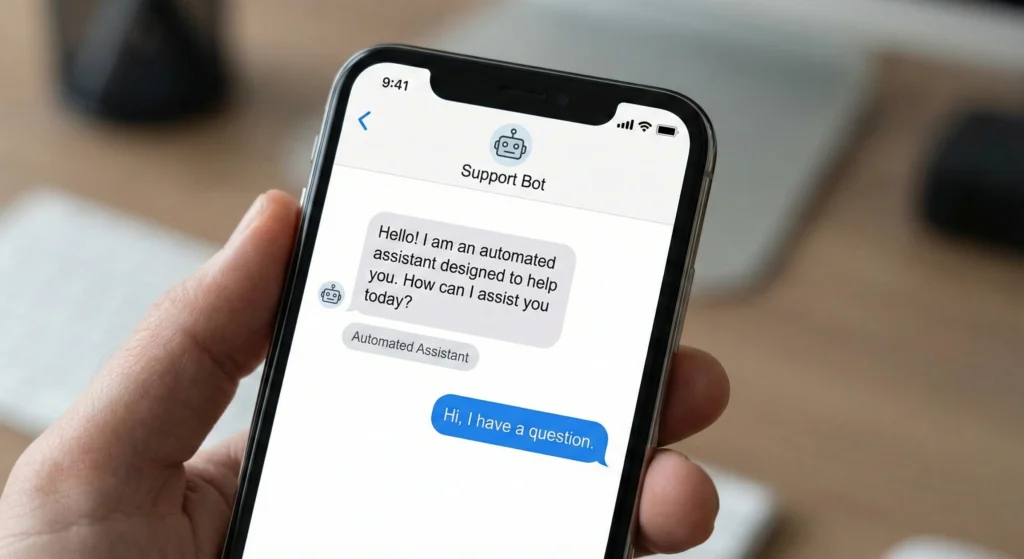
Your welcome message should clarify this. A simple line like, "I am an automated assistant here to help with basic queries," satisfies most 2026 disclosure laws. This builds trust and avoids accusations of misleading sales tactics.
3. PII Redaction Protocols for Policy Numbers and Health Data
Never send raw sensitive data in a plain text message. PII Redaction is a critical safety feature. If a client sends a photo of their medical records, your system should automatically blur or flag it.
Agents should avoid typing out full credit card numbers or Social Security numbers. Instead, use secure links. The goal is to keep the chat history clean of data that hackers could use.
4. Archiving & Record Retention for Audits
Every message must be saved. Personal phones do not do this securely. You need a system that archives chats for at least 5 to 7 years, depending on your local laws.
These archives must be immutable. This means an agent cannot delete a message to hide a mistake. Auditors will ask for these logs during an inspection. If you cannot produce them, you fail the audit.
5. End-to-End Encryption Verification
WhatsApp uses encryption by default. However, when you use third-party tools, you must ensure that encryption remains intact.
Verify that your software provider maintains end-to-end encryption protocols. Data should be encrypted while it travels and while it sits in your storage. This prevents data breaches during the transfer from WhatsApp to your agency's dashboard.
Insurance-Specific Regulatory Nuances
Different types of insurance have different rules. A property agent faces different risks than a health insurance broker.
HIPAA Considerations for Health Insurance Agents
For health agents in the US, HIPAA rules apply to chat. You cannot discuss a specific diagnosis or treatment plan openly on WhatsApp unless you have a Business Associate Agreement (BAA) and strict waivers in place.
Even with waivers, it is best to use WhatsApp only for scheduling or generic alerts. For sensitive health discussions, direct the client to a secure patient portal.
Financial Advice Disclosures for Life and Wealth Products
Life insurance is often treated as a financial product. This triggers strict financial advice regulations.
Agents must provide clear disclaimers. Before discussing ROI or cash value accumulation, an automated disclaimer should appear in the chat. This protects the agent from claims of giving unlicensed financial advice.
Handling Claims Data Securely on Instant Messaging
Claims involve photos of accidents or damage. These are sensitive files. Do not ask clients to just "send the pics" to a personal number.
Use the WhatsApp Business API to generate a secure upload link. The client clicks the link to upload photos directly to your server. This keeps the heavy data off the chat platform and organizes it in your claims file immediately.
Visual Guide: Compliant vs. Non-Compliant Messaging Examples
Visualizing the difference helps agents understand the boundaries. Below is a breakdown of what is safe and what is dangerous.
The 'Safe Harbor' Phrasing vs. Regulatory Red Flags
| Scenario | Regulatory Red Flag (DO NOT USE) | Safe Harbor Phrasing (USE THIS) |
| Initial Contact | "Hey, saw you looked at our site. Want a quote?" | "Hi [Name], this is [Agent] from [Agency]. You opted-in for updates on our site. Reply STOP to unsubscribe." |
| Policy Details | "Your policy covers cancer and heart attacks explicitly." | "Please review your policy document [Secure Link] for full details on covered critical illnesses." |
| Payment | "Just send me your card number here, I'll run it." | "Please use this secure payment link to complete your renewal: [Link]." |
| Urgency | "Buy now or the price doubles tomorrow!" | "Your quote is valid until [Date]. Would you like to finalize it today?" |
Sending a Policy Renewal Reminder
- Bad Approach: The agent sends a text from a personal number: "Hey, your insurance is expiring. Send money soon." This lacks professionalism and verifies nothing.
- Compliant Approach: The system sends an automated Template Message: "Hello [Name], your auto policy ends on [Date]. Click here [Secure Link] to review your renewal options." This uses a pre-approved format.
Answering a Coverage Question
- Bad Approach: "Yes, you are 100% covered for flood damage." This is a liability. If the claim is denied, the chat log proves the agent promised coverage.
- Compliant Approach: "According to your policy summary, flood coverage is included under section C. Please verify the limits in the document attached." This directs the client to the official contract.
Technical Setup: Transitioning from Personal App to Business API
Moving to the API is the biggest step toward compliance. It changes WhatsApp from a phone app into a professional software tool.
Why the Personal WhatsApp App is a Liability for Agents
The personal app gives the agent total control. They can delete chats, block numbers, and hide conversations from the agency owner.
This is a major liability. If an agent leaves the company, they take their client list and chat history with them. The agency loses that data forever. The personal app also cannot integrate with compliance software.
Leveraging the WhatsApp Business API for Compliance
The API connects WhatsApp to your CRM. It allows multiple agents to manage chats from one dashboard. It enforces rules automatically.
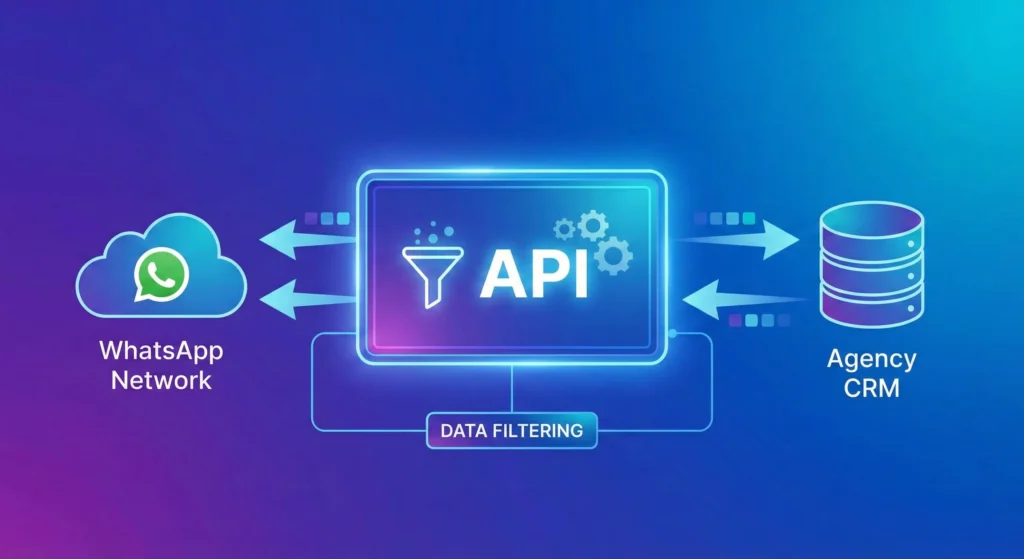
With the API, you can set permissions. For example, junior agents might not be allowed to send files. For a deeper dive on automating these workflows, read our guide on WhatsApp Business Api Integrations 2026 Automation.
Securing the Green Tick for Trust and Authority
The Green Tick next to your business name proves you are a legitimate brand. In 2026, clients are wary of scams. The Green Tick shows Meta has verified your agency.
Getting verified requires a strong domain reputation and valid business documents. It increases response rates because clients feel safe. Learn the steps to verification in our WhatsApp Green Tick 2026 Guide.
Navigating Template Categories Approval for Insurance Alerts
You cannot just send any message to start a conversation. You must use Templates. Meta categorizes these into Marketing, Utility, and Authentication.
Insurance agents must choose the right category. A renewal reminder is a "Utility" message. A sales promo is "Marketing." Mislabeling these can get your number blocked. Review the rules for WhatsApp Template Categories Approval to avoid rejection.
Operational Best Practices for Daily Agent Workflows
Compliance should not slow you down. Good workflows make compliance automatic and invisible.
Validating Client Identity Before Discussing Coverage
Always ask a security question before sharing details. Even if the name on WhatsApp matches, the phone could be stolen.
Ask for the last four digits of their policy number or their zip code. This simple step, known as Two-Factor Authentication (2FA) for chat, protects client privacy.
Automating Compliance with Smart Integrations
Connect your WhatsApp API to your agency management system. When a chat ends, the transcript should automatically save to the client's file.
This automation ensures you never forget to archive a conversation. It removes human error from the compliance process.
Managing Drip Campaigns Without Triggering Spam Filters
Agents love drip campaigns for nurturing leads. However, sending too many messages too fast looks like spam.
Space out your messages. Ensure every message has value and an opt-out button. Aggressive sales tactics will lower your "quality score" with WhatsApp. For a strategy that converts without annoyance, see our article on WhatsApp Drip Campaigns: Setup, Strategy & Success Guide.
Expert Analysis: The ROI of Compliant Communication
Compliance costs money, but non-compliance costs more. Investing in a proper setup has a positive Return on Investment (ROI).
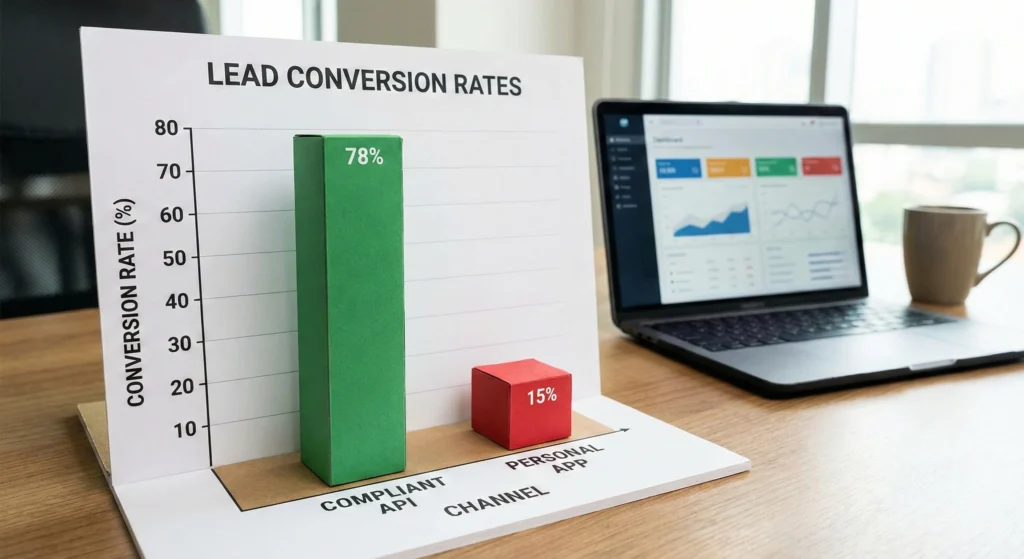
Data Breakdown: Trust Metrics and Conversion Rates
Clients are more likely to buy from a verified, professional profile. Data shows that agencies with the Green Tick and professional templates see a 20-30% higher response rate than those using personal numbers.
Risk Mitigation vs. Lead Generation Speed
Some agents fear compliance slows down sales. In reality, it speeds up the right sales. By using automated templates and secure links, you filter out unqualified leads faster.
You also avoid the massive cost of lawsuits. One fine for a data breach can bankrupt a small agency. Compliance is the ultimate insurance policy for your business.
Future-Proofing Your Agency for 2027 and Beyond
The rules for 2026 are strict, but they are manageable. The future will bring even more focus on AI transparency and data privacy. By adopting the WhatsApp Business API now, you build a foundation that can adapt.
Start by auditing your current communication. Move away from personal devices. Implement the Compliance Checklist above. This ensures your agency grows securely, building trust with every message you send.